
When younger, I was led to believe my name translated to ‘the dear one/beloved’. Only once Sanskrit lessons were commissioned did I learn its literal meaning, ‘one with pleasing manners’. Thus, I desired an equally meaningful name for our daughter. For a time, we were quite content with “Ishana” and even received monogrammed items, until Sri came across Freakanomics’, the power of names. Names such as Shaniqua, (God is gracious), Monifa (I am luck), Rashida (righteousness), Shanika (young), remnants of a proud African heritage, regrettably did not command the same respect in the West. In fact, they carried the weight of a millstone around the bearer’s neck. When the likes of ‘Ishana’ appears on paper there is a multitude of negative stereotypes that may ensue—forcing one to acknowledge that an impression is predetermined.
Historically, there have been more dire consequences of preconceived ideas invariably resulting in extreme measures—be it the Jewish who underwent rhinoplasties to avert being persecuted and to assimilate, or the fairer African Americans who passed by concealing their linguistic patterns and accents, while singeing their hair to eradicate its natural twists and turns. This weighed heavily on us.

Madam C. J. Walker born Sarah Breedlove; (1867–1919) was an American entrepreneur amongst other things. She made her fortune by developing a line of hair care products for black women and popularized hot combs that straightened hair. At the time of her death, she was considered the wealthiest African-American businesswoman and recorded as the first female self-made millionaire in America.
image: biography.com
For many years I crusaded against the mispronunciation of my name. I was resolute in curbing any attempts at truncating it, and defensive when some cleverly tried to call me by my Irish middle name, Darina.
Yet other South Asians from Generation-Z had an answer to this dilemma by taking cues from their Korean counterparts who existed under one name but whose birth certificate bore another. I learnt Vaishnavi was really Angela to her friends— a Hindu devotee of Vishnu became a Christian messenger of God. Where once I may have cast judgement, I now applaud this form of self-determination. After all, is not our ultimate goal to assert oneself while not being excluded?
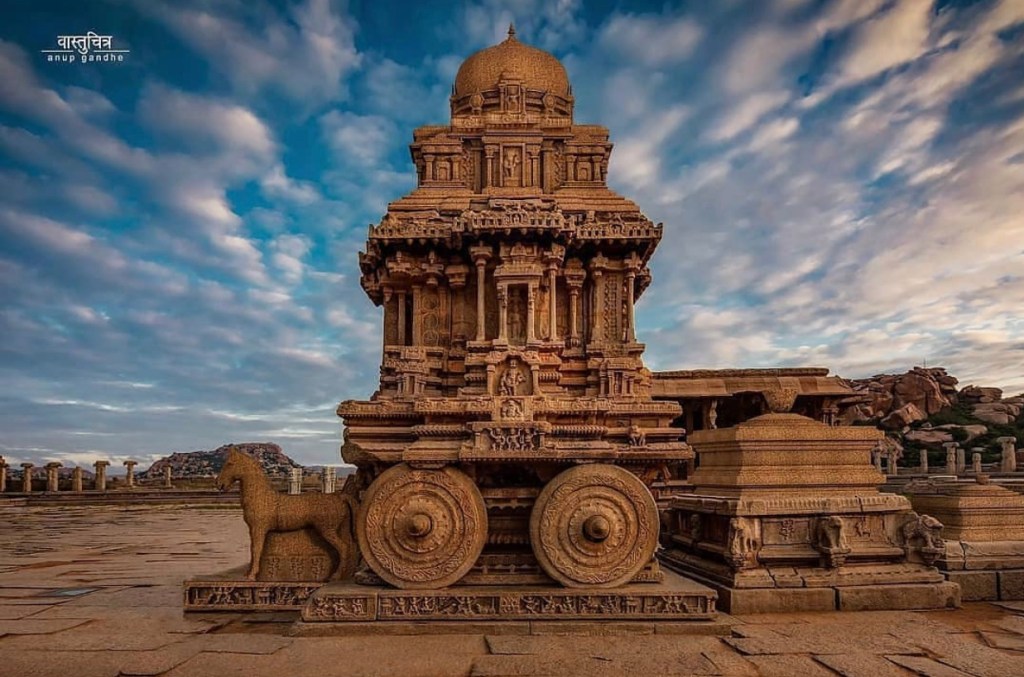

feature image: Sky mirror by Anish Kapoor, source, Joanne Gatefield / Sky Mirror invites us to take a step back, look up and re-think our angle. Anish Kapoor (b.1954, Bombay, India) is one of the foremost artists of our time. His sculptures extend the formal precepts of minimalism into an intensely spiritual and psychological realm, drawing viewers in with their rich colors, sensuously refined surfaces, and startling optical effects of depth and dimension. They give visceral and immediate impact to abstract dualities such as presence and absence, infinity and illusion, solidity and intangibility. Source, Public art fund (L) ‘The Stone Chariot’ by Anup Gandhi /Hampi is a medieval kingdom that served as the capital city of Vijayanagara Empire for over 200 years (~1336-1565 AD) and a UNESCO World Heritage site. According to Hindu mythology this is where Shiva and Parvati resided. Amidst its many ruins is the Chariot temple (Garuda shrine) as shown. (R) “I’ve arrived!” by ramesstudios/ Shaila (daughter of the mountains) is a manifestation of the Hindu goddess, Durga; who amongst other things is also known as Parvati.
 Sepia-tinted Lens