Upon completing their medical education in the 60’s, my neighbors emigrated from India to practice in Britain. Their English-nuptials, a ceremony without family, exemplified how progressive and unorthodox they were; yet, their forward-thinking spirits were marred in the face of archaic colonial racism, ultimately driving them to the United States.
Ironically, at least some of the onus stems from the emergence of the socially minded, National Health Service (NHS). Though ideal in merit, the NHS partook in insidiousness – hiring South Asian physicians (from British modeled schools) to occupy less coveted specialities in unsavory environments was strategic. Perhaps unwittingly, it had become the backbone of a system designed to allow British citizens to flourish while enabling a covert tradition of indentured servitude. This was the educated migrant’s struggle, resembling that of the unskilled worker. Whether it was working for the Nestle factory or NHS, the lack of wages, support and upward mobility highlighted the prevalence of discrimination.
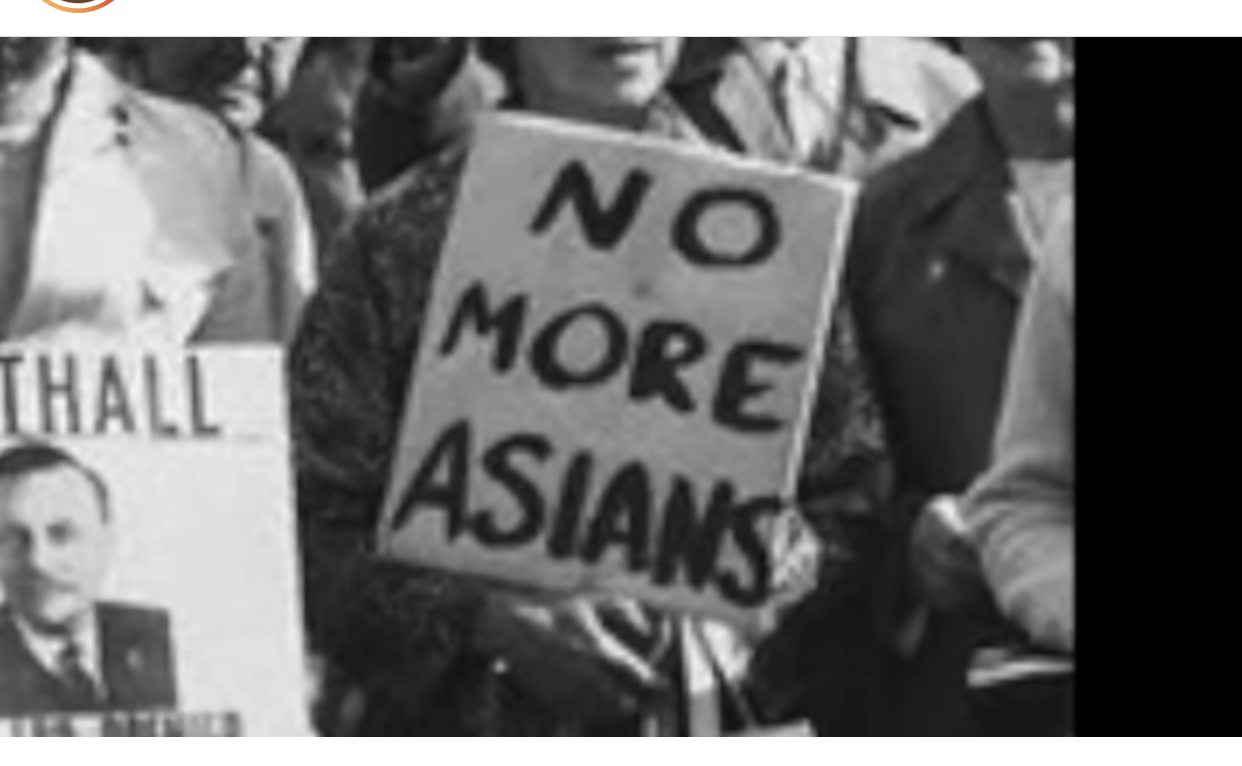


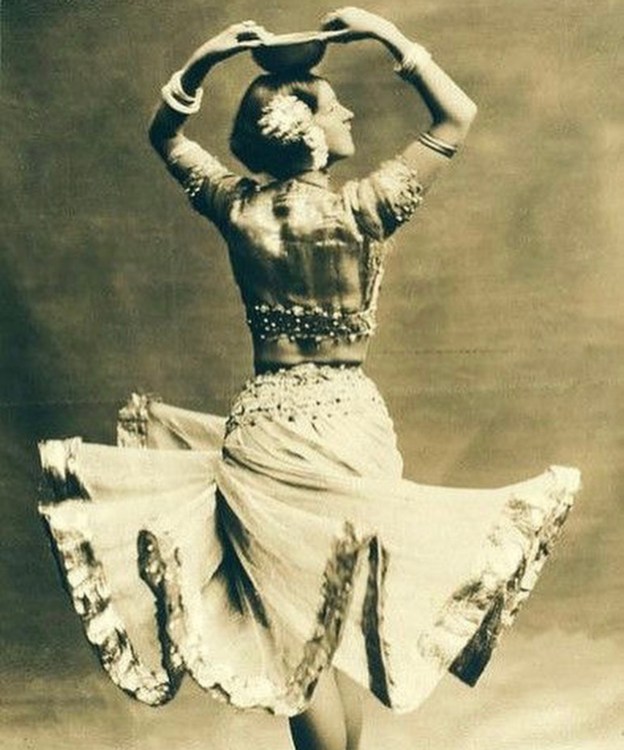
featured image: Ruth Saint Denis (1879 – 1968) was an American modern dance pioneer who was deeply attracted to the folk dance of India. Her first ‘oriental’ performance in 1906 was from a Radha-Krishna poem. St. Denis believed dance to be a spiritual expression, and her choreography reflected this idea. Source: New York public library. above images: In 1979, the National Front (NF, an outspoken racist political party) intentionally held a meeting in Southall, where a large South Asian community resided; knowing there would be protests and free publicity for their campaigns. In the clashes that followed between 3,000 protestors and 2,800 police officers, hundreds of arrests were made, and many injured. This event would later be known as the Southhall riot of 1979. Three years earlier, Gurdip Singh Chaggar had been murdered in the same area in a racist attack. After his death, one of the NF leaders said “One down, one million to go.” Later, a judge would rule that this did not incite racial hatred. Source: discoversociety.org
Almost Twenty years later, some from my generation pioneered a phenomenon known as ‘Day-jams’ or ‘Daytimers’. Deeply seated in this premise was a rebellious response to conservative parents tethering their adolescents. Inadvertently, these recurring events served as a cultural haven where South Asians no longer felt different or marginalized. Fascinatingly, this movement developed concurrently across the globe – Toronto, London and South African cities– in an era prior to ubiquitous Global connectivity.

As the name suggests, Indian youth frequented these events to party in a club, while school was in session. The music in these Day-jams itself generated a liminal space where freedom was personified by the likes of England’s Apache Indian and Bally Sagoo — progenies of the working class who migrated in the 60’s and 70’s to Punjabi ghettos. They reimagined familiar Bhangra and Hindi music with reggae, soul, and rap, resulting in anthems for South Asians generating solidarity and contending visibility.
Systems were structured to denigrate immigrants—- a rejection that percolated through generations of South Asians at every level. And In spite of this they persevered, finding and forging their niches.
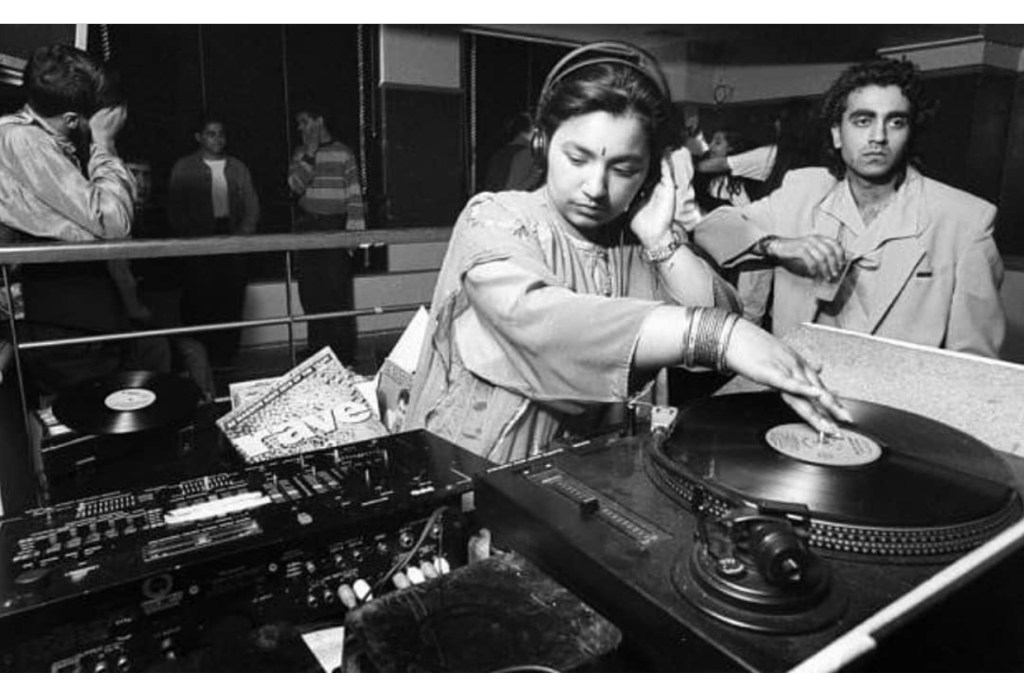

(L) Rani Kaur, aka DJ Radical Sister, mixing records at a day timer in the 90s. Photograph by: Tim Smith, Source: The Guardian (R) a scene from, director and actor Riz Ahmed’s 2016 short film Daytimer
 Sepia-tinted Lens
You must be logged in to post a comment.