As special as Mataji is to me I am not oblivious to the fact that many children had households similar to ours as a result of Pierre Trudeau promoting multiculturalism in the 1970’s. Consequently, the portion of “family class” or sponsored relatives allowed into Canada expanded significantly; skewing the system towards large extended families. This explains how years ago in Winnipeg, a casual superfluous comment about our dear friend Garry’s grandmother, turned into an hour long reminiscence replete with mockery over these seemingly frail women who were the true dictators and puppet masters of our house holds. It’s remarkable that across this new nation of theirs these women operated in almost the exact way inevitably rendering respect and disdain; and yet somehow they transferred a sense of culture and family. This is what I grapple with now. How do I transmit this being away from all family in a city not nearly as ethnically diverse (as the one I grew up in), in a country increasingly becoming xenophobic, to daughters who are only half Indian?
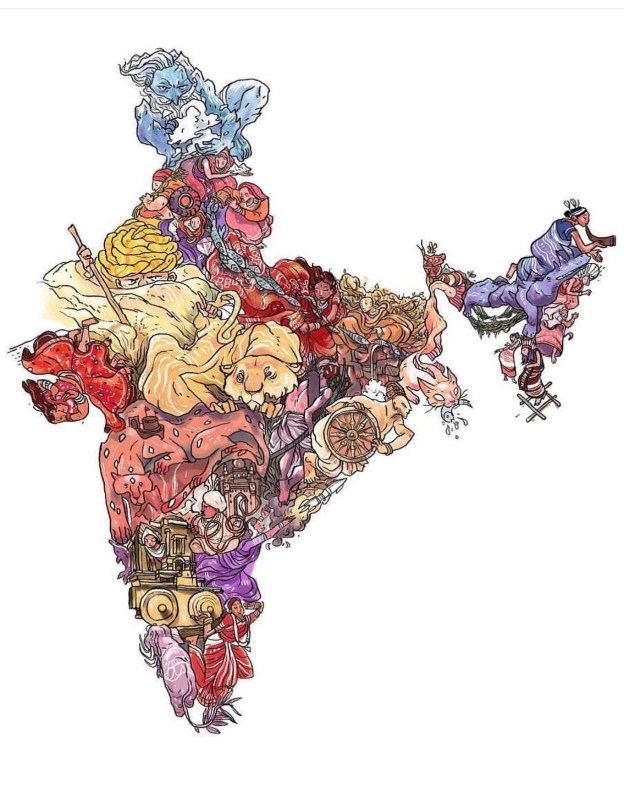
feature image: by Upamanyu Bhattacharyya; above image, Pierre Elliott Trudeau, seen here on June 23, 1971, pushed for a multicultural Canadian society later that year. Courtesy, Fred Ross/Toronto Star via Getty Images
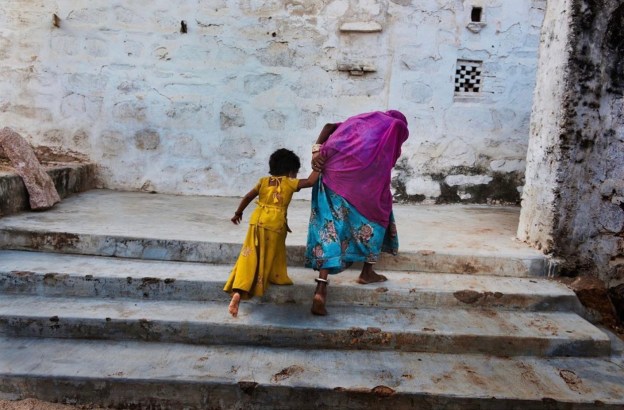
As a child, I bemoaned the reality that Mataji never embodied the saccharine sweetness of fictional grandmothers: demonstrative of love, bestowing excess candies, and unvigilant of rules–essentially a complete antithesis to grandmothers. Yet our house contradicted these conventional norms; it’s as if some imaginary force exacted a role reversal between my mother and my grandmother. In fact it was my mother who did the spoiling, while Mataji who lived a disciplined lifestyle saw no reason why a child need not follow the same rigors, thus a Vedic wizard was created well versed in all the mantras necessary to perform havans by the age of eight. In addition to this, her manner of tutoring was steeped in rote memorization. Ensuring her teachings weren’t in vain, she implemented a ritual for memory enhancement requiring me to consume five blanched almonds every morning—five was the prescribed number for children and seven for adults. Loving this part of my regime, I looked forward to being promoted to adult status but alas children never get old and well into my twenties I was still given five almonds. Had I lived at home she too would never get old to me but I had the miserable burden of recognizing her fragility every time I visited and yet she walked on her own, while the walker stayed stationed at its post unmoved from my last visit.
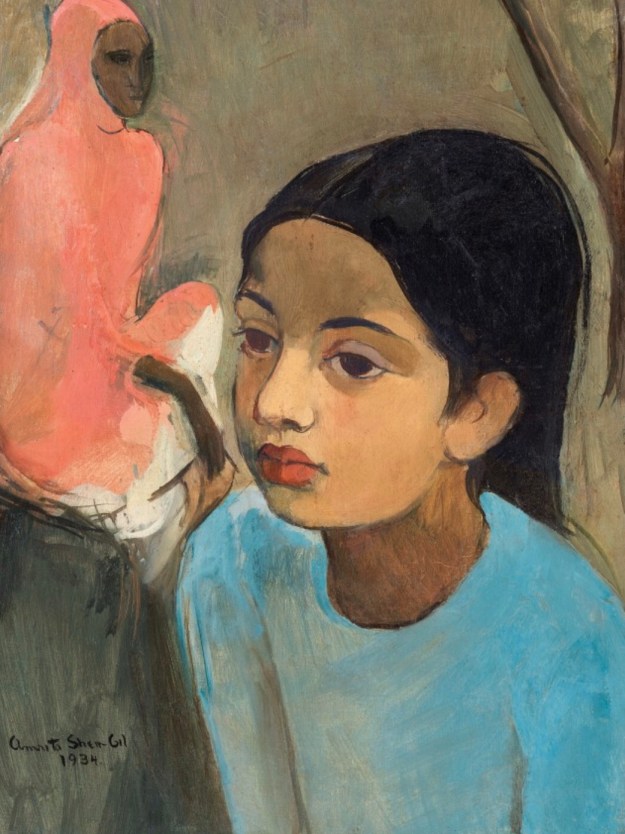
Amrita Sher-Gil 1913 – 1941 THE LITTLE GIRL IN BLUE
Born in 1913 in Budapest, Sher-Gil grew up in a cultured and intellectual family who initiated and supported her early interest in art. Her mother was a Hungarian-Jewish opera singer and her father was an Indian Sikh aristocrat and scholar. She lived in Hungary, India and Paris during her lifetime, and her art embodies a bohemian combination of east and west.
image; Sotheby’s
Mataji was part of a generation of women who were unapologetically tough, running households consisting of extended family members, and appropriating money for that which was essential –I was once told that mistakes in notebooks were corrected with soles of slippers because they were avatars of the erasers. it was with this very same prudence I thought she displayed her affections, not being cognizant that unlike my six year old neighbour who cleaned the house and cooked dinner, I was omitted from having such responsibility that my once precocious grandmother and neighbour shared. It is heart breaking that so much love can exist and be unnoticed. However, attention was not what she seeked nor validation, which is why only after her death was her benevolence with the red cross society, valour in aiding wounded soldiers and involvement in finding shelter for abused women (during Partition), came to light. Such was her comfort with self and confidence in truth that years before when someone usurped my father’s trials and tribulations (when having left India) as their own, Mataji held a quiet reserve as she unfailingly knew that her son was the true heir of those experiences.
The night when Mataji first arrived to Toronto twenty-five years ago, she entered the house with my father carrying her brown suitcase. Ironically after her passing, when surveying her possessions there was no more than could be fitted into that very suitcase. It’s as if her whole life was just us.

 Sepia-tinted Lens
You must be logged in to post a comment.