Tag Archives: Indian culture

Custom-ary

On returning from a soiree, a friend commented on how ‘Canadian-Indians have a good balance.’ This was followed by ‘you want Indian friends that aren’t too Indian, but you don’t want them if they aren’t Indian enough!’ And therein, she succinctly contained our thoughts, a subjective threshold based on a hyphenated identity.

One of the many repercussions of belonging to a former British colony is a fallacy of one’s idea of self. Despite having the most globally significant democracy, India does not have a national language as with most former colonies. Consequently, the knowledge and usage of English becomes a currency to evaluate and discriminate, continuing a tradition of hierarchy

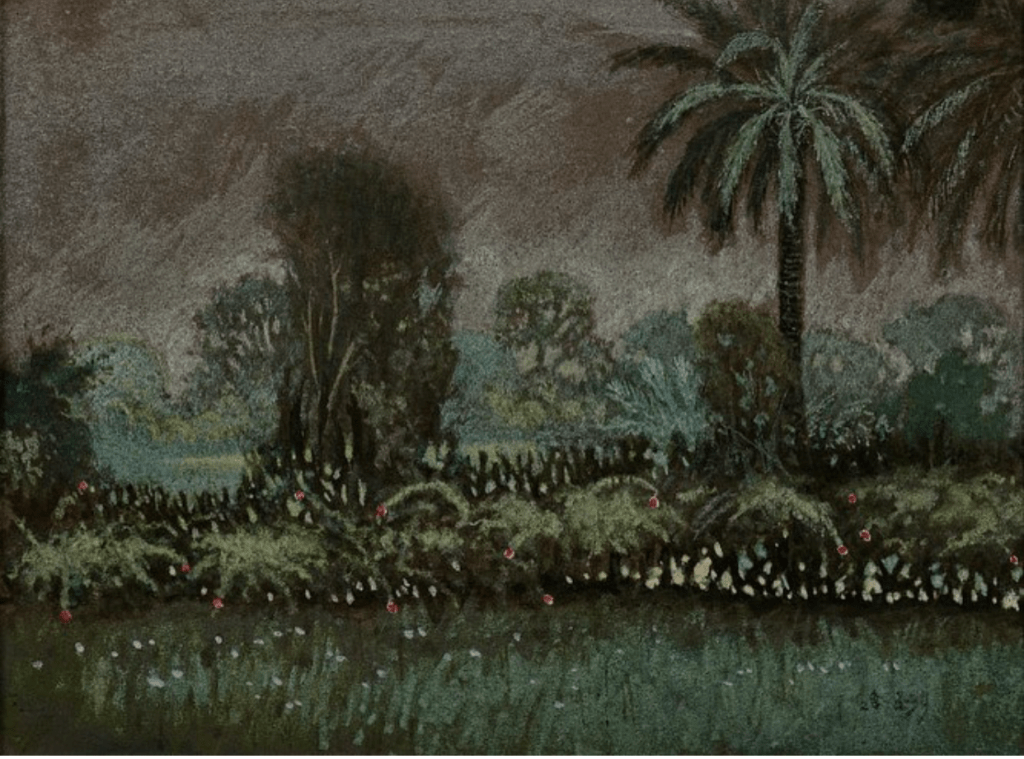
feature image: Simryn Gill, ‘Water Drawing #17‘, 2021, ink on paper. This drawing project is prompted by Charles Darwin’s 1837 sketch ‘Tree of Life’ in which he scribbled down a framework for his speculations in one of his early ‘transmutation’ notebooks. This intuitive drawing of an evolutionary tree is headlined by the words “I think” and is a precursor to Darwin’s radical theory of evolution, common descent, differential survival and natural selection.Kallat invites artists and audiences to consider if Darwin first wrote the words “I think” and then – when words could not capture his emergent thoughts – proceeded to draw, or if the drawing preceded the words. above image: from @indiaartfair, via ritukumarhq; ‘India is known as a glorious melting pot of people, cultures, and beliefs. Diversity and equality are fundamental to our founding principles.’

I am constantly fascinated by Hispanics, who, upon meeting one another, naturally erupt into Spanish, stranger or not. It would be unconventional for me to partake in something akin, regardless of being fluent in three South Asian dialects. So much so that if a contemporary greeted me with a ‘Namaste,’ I would be puzzled.

above image: galleryveda, artist: Ganesh Selvaraj “As an act of interpretation, we approach a visual and apply a metaphor. So first, we see a reference, and then we try to interpret it

Language imparts culture, but our mundanity sublimates our heritage. Indians dispose of Styrofoam and redistribute takeout in proper serve-ware when hosting. Ukrainians disdain the legal formality names evoke thus Aanya transforms to Aan-ichka. Similarly, Latinos add suffixes’: Juan-ito, Hernan-cito, Ev-ita, and Laur-ita, diminutive sounding forms yielding a burst of love. And when Persians meet, it’s customary to inquire how relatives are faring; this can last up to an hour.

I would like to believe generations have taken turns depositing small aggregates of an immutable sense of who we truly are.
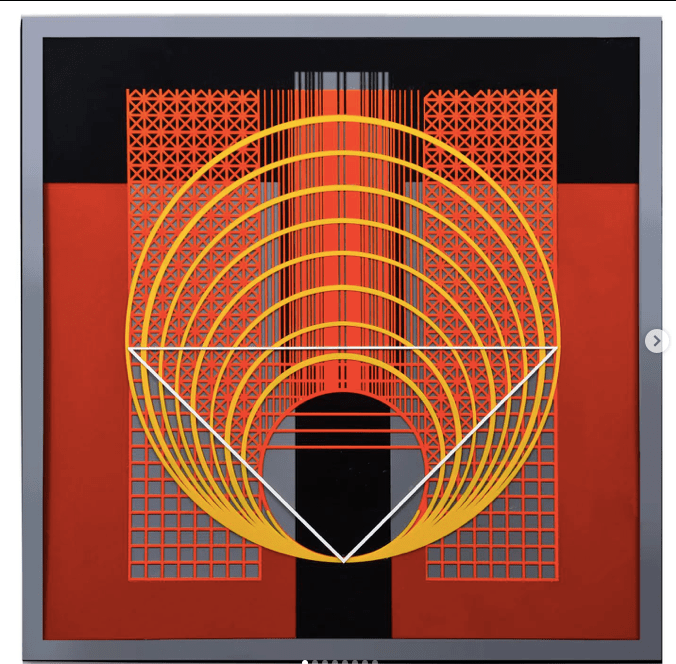
above image: galleryveda, artist: Alagarraja ponniyah. In his works he represent the timeline in the minds of the viewers to reflect our history, present, and our future. He used reflective materials to not only reflect the objects placed before it, but also human emotions and constant changes of time. It depicts the visuality of human emotions in today’s world. He believes that if the world is a mirror of our inner world, any emotion we experience in our world is a reflection of our thought patterns and actions. The mirroring phenomena he explores are also the dualities of history and future, technology and environment.

Migrated

When Barak Obama first campaigned, some were disgruntled as his ancestors lacked the history of slavery as theirs. Their matching skin tones was not enough of a bond—communal suffering has the power to bind. Trauma becomes the hallmark with which they recognized one another, as with the numeric sequences on the camp survivors.

feature image: ‘Transit’ by Vala B Shende Made up of thousands of steel discs welded together, the work depicts 22 laborers in a life size truck. The rear view mirror of the truck displays footage of roadways giving the illusion of movement, but as Shende says ‘they aren’t really going anywhere.’ The piece which was conceived as a comment on migration and urbanization holds even more relevance today amid the continuing migrant crisis we find ourselves in. Is the truck carrying laborers into the city or are they in-fact being forced to leave? Shende’s father was a scrap metal merchant and the metal discs have become his signature, his language as he calls it. The shape to him representative of molecules  and the reflective ability allowing the viewer to see himself in the pieces. above image: from the book Watan, which explores both sides of the Punjab by Graciela Magnoni. “One thing that was clear to me after so many trips to Punjab is that after 75 years of separation, both sides still miss each other and long for connection.”

What is intriguing is no matter how much we orient ourselves differently than our forbearers, we seem to be in a perpetual state of ‘dis-orientation,’ relentlessly trying to capture our cultural legacies. This was evidenced by a friend’s Chicagoan father, who fiercely devoured news of India while unaware of American breaking news headlines. Contrarily, another, having friendships that spanned decades, yearned for a Caucasian fraternity in Toronto.
A quiet reminder that acceptance does not always translate to belonging.
Now a private literary club member, one wonders if he is taunting the WASP majority to look beyond his skin color and recognize their similarities.

With tears welling up, my brother’s mother-in-law once shared how children called her DP a “displaced person” in school. The Irony being she is Canadian-born to Slovanian parents and phenotypically white. And yet six decades later, her pain conveys she was never Canadian enough.

above image: ‘Burden’ by Rupy C. Tut. “Silence is a burden women have carried for too long. In this work, I reflect on their silence, their story, and their convenient absence from the narrative we are told.”

When young, the metaphor of Canada being a tossed salad was widely taught. Theoretically, our diverse identities are celebrated, the parts making up the whole mosaic. Though since coined in the 20s, studies illuminate the mosaic is not as horizontal as the diverse architectural figures in city landscapes but relatively vertical where certain groups preside and are overrepresented in influential decision-making positions.

Caught in the cultural shift, new immigrants must decide who they are.
Some stay tethered to their native country, while others’ penchant for assimilation never diminishes.

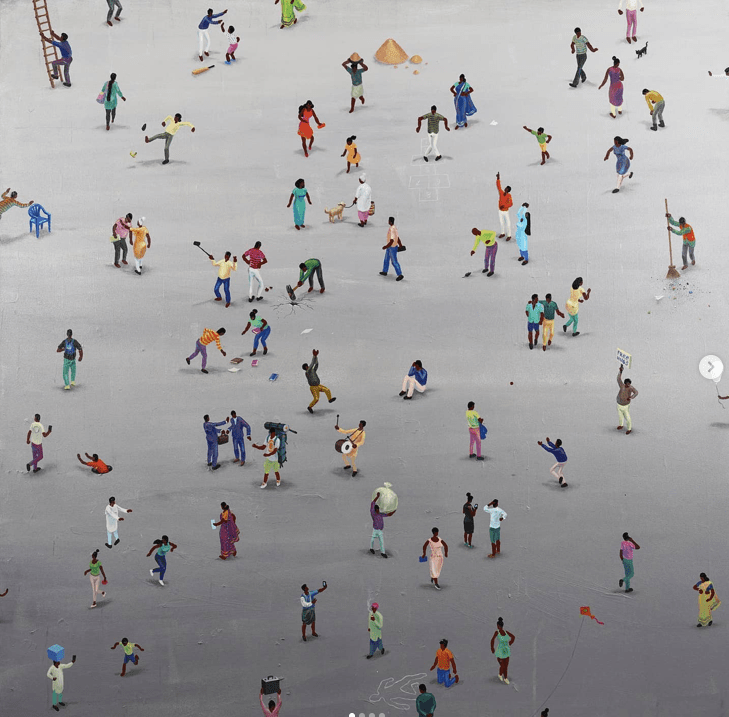
Above image: A Man Of The Crowd (2017), by Sam Kulavoor titled, instagram

Home-ish

Recently at the Jaipur Literary Festival (JLF) in Toronto, I attended a panel where several authors discussed their thoughts on ‘home’. Sukutu Mehta, spoke of being so disgruntled in his first year when having moved back to Mumbai that he hoped for it to be bombed or swallowed by a tidal wave. He keenly echoed my sentiments.

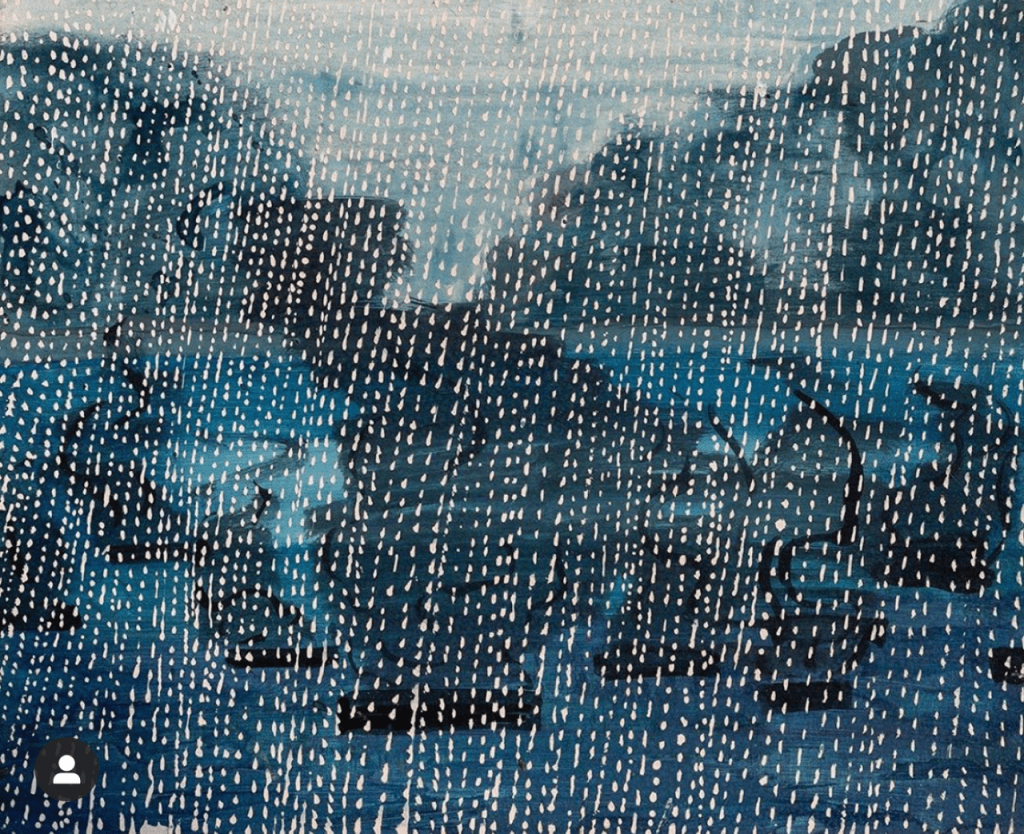
feature image: Switch 2021, part of a collage series, To code-switch is to be multiple and relational, to embody and inhabit difference, to resist claiming origins and refuse the imposition of categories. As a methodology, code-switching is integral to Lubna Chowdhary’s artistic practice which has long sought to stake out a conciliatory middle or common ground between various binaries: art and craft, East and West…’ — excerpt from Murtaza Vali. (L) Mumbai rains, image: Punit Paranjpe, image by, Hasan Mahmud Prottay, (R) Mumbai monsoon in 1983. God please stop this, by Mahesh Baliga


After I left Toronto, I longed for it, and was perturbed by the realization of how integral to my essence it was. Eventually, I became ambivalent because I neither partook in nor was witness to the direction of change; then bitterness set in as the evolution had rendered the city unrecognizable.

What is it about ‘home’ that can betray? We desire progression but we crave a nostalgic type of Ekphrasis. If Toronto is global, Scarborough is hyper-cloistered.
Toronto, now a world-class destination has a vast foreign footprint that has effectively redefined the city.
Alternatively, Scarborough is touted as a place for authentic cultural culinary cuisine. Hand pulled Uyghur noodles can be found down the road from a Jamaican patty shop, juxtaposed to a Sri Lankan sari boutique.  A short distance lies apartment buildings —- with parking lots used by Punjabi farmers to sell amongst other things, the most fragrant cilantro. All this, arguably a healthy breeding ground for all cultures imparting a sense of ‘home’.

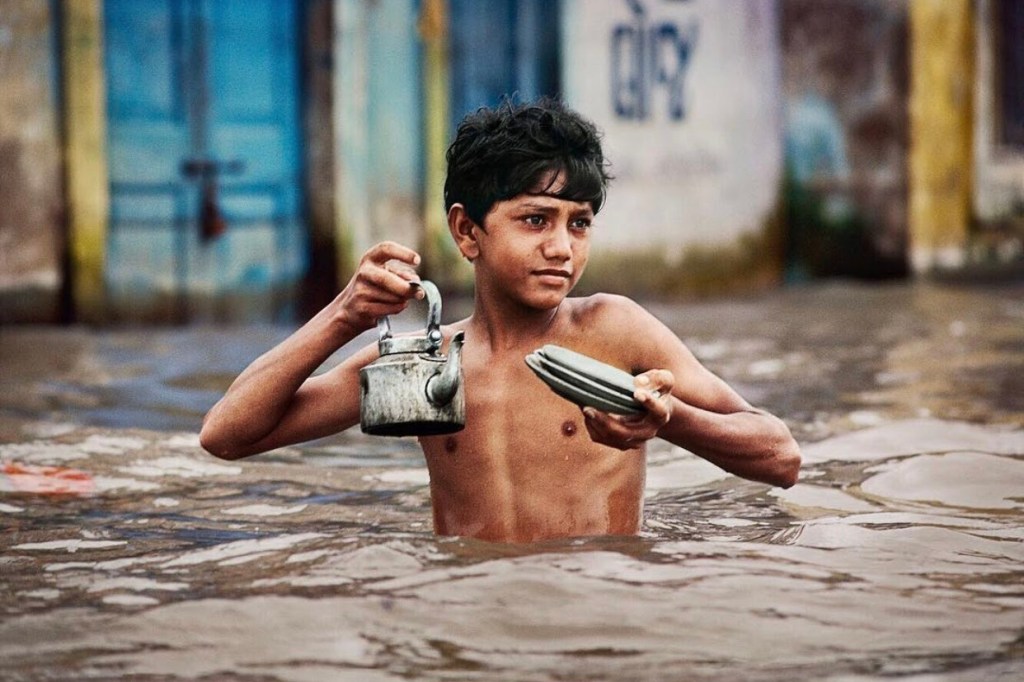
(above image) A chaiwalla carries a tea kettle in waist deep monsoon water, by Steve Mccury,


Interestingly I desired the opposite growth in each. I wished for Scarborough to be more than just culturally determined, and for Toronto to cease becoming predictable and uniform.

(above image) by Siddharth Dasari; he photographed close to 350 buildings during his stay in Copenhagen to get a sense of how different neighborhoods evolved, how they perceived color and how housing was planned. source @artandfound.co

Respect

“Don’t say ‘uncle’ just call me Ashok!”  I shuddered every time I heard this as Indians refrain from addressing their elder’s by name. 

The notion of respect is deeply entrenched in South Asian culture. Every relationship is given a title of veneration. This reverence is not limited to people but also transcends onto inanimate objects: money, food, books and divine images topped the hierarchy creating a parallel caste system.
As children, if any were treated recklessly, we were admonished and required to touch the object with our forehead to absolve ourselves.

I once read how in India there was a residential building whose sidewall had become a makeshift urinal. Unbearable pungent odors led the inhabitants to place prohibiting signs in vain. Only when the trifecta of Hindu gods –Bramha Vishnu & Shiva, were painted did the dual use of the wall cease. It remains to be determined whether respect or fear was the driving force.

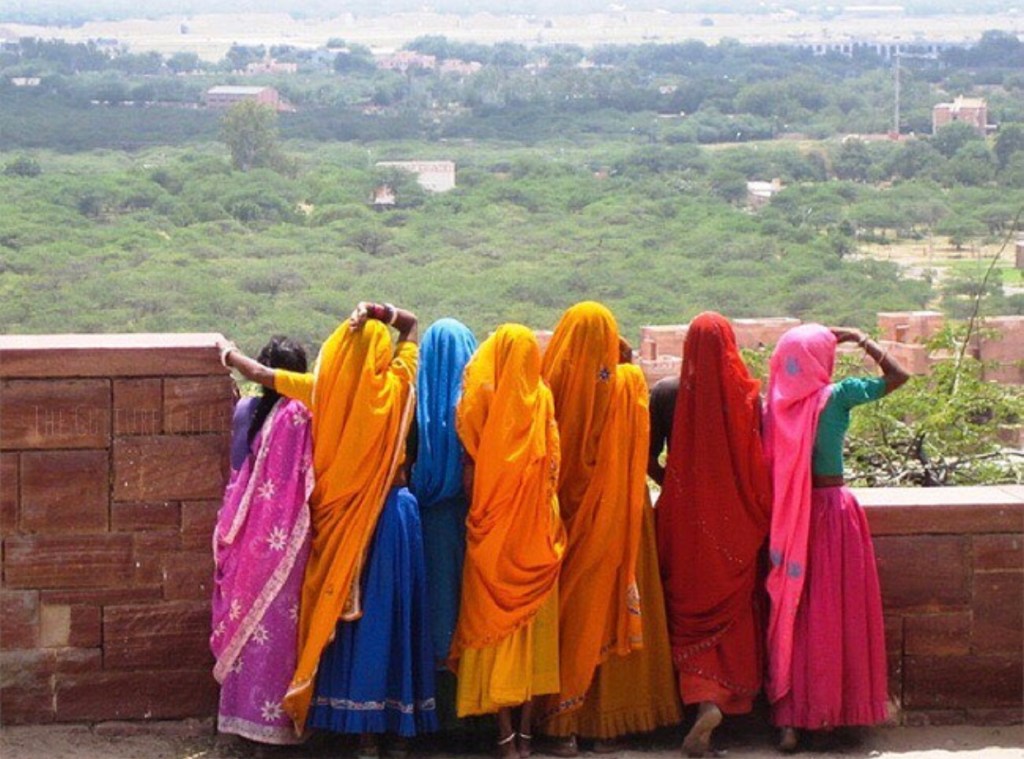
feature image: Perception and Reflection by Rana Begum’s, source; Art-agenda /Comprised entirely of reflectors, her work describes our ever-evolving built environment. Inspired by the straightforward patterns and vibrant colors of roadsigns and the way in which their surfaces shift as the day progresses, these works too shift and change as light exposure varies and as viewers walk around them. above image: photograph by Steve McCurry


This year, we celebrated the auspicious penultimate day of Navratri with friends.
What became apparent was our fallacy in assuming (recently) naturalized Americans would have a thorough knowledge of religious and cultural rites. I started to recognize the breakdown in the transmission of information from one generation to the next.

Recalling how after 25 years, when Sri returned to Sri Lanka, he hoped to learn why consuming meat on Fridays was disdained. Much to his chagrin he discovered no-one knew; generations had yielded without questioning.
I began to consider that perhaps when respect is mandated, a divide may manifest, impeding conversation and preventing vertical integration.

One afternoon while on the front lawn of our new home, a neighbor approached us and Shyla exclaimed, ‘that’s Sashi!’ As she drew closer, I noticed she was about my mother’s age and I whispered ‘Sweetie say Sashi aunty’ and she persisted ‘Sashi!’ Could dropping the honorifics break down barriers?

(L) Three Women by Jamini Roy (1887-1972), source; British museum / This particular work is one of Roy’s iconic images: that of Bengali women. Roy is critical to any narrative of the development of modern Indian art in the early 20th C when there was a frantic search for roots and identity. Roy turned away from prevailing styles and looked back to the visual stimuli of his childhood: the folk arts of Bengal. He used this storehouse of forms to create a new pictorial language, irrevocably Indian in execution and feeling, yet simultaneously modern in its treatment of the two-dimensional reality of the picture plane (M) piece by Maria Qamar, source; hatecopy (R) In Myanmar, Colgate prints interactive educational information in toothpaste boxes design by; redfuse and Young & Rubicam, source; border and fall

Hosting

I once rotated with a Radiologist from a modest background, as was her Gastroenterologist husband. Originally Indian citizens, they were now emblematic of the American dream: residing in an affluent area, privately educated children, and the ability to travel and explore interests fully.
She spoke of how they socialized with two distinct groups — one resonated with their past and the other was in keeping with their present. When I inquired if there was a preference of company, there was a pause. She described how the women of the former set would flock to the kitchen after dinner where exhaustive talk of suitable Tupperware abounded. Preferring a more notable end, she refrained from joining and remained with more interesting conversations amongst the men. I realized my parent’s hosting shared the same fate, and was inspired to prevent a recapitulation. Thus my foray was Shyla’s first birthday party where hired help prevented friends from being uprooted or obliged.

This bore to mind when attending a child’s birthday party, dinner at my neighbor’s and a baptism of twins. At the birthday, grandparents maintained order; our neighbor’s brother-in-laws were stationed in the kitchen; and the baptism’s execution was facilitated by an entourage of relatives. It was fascinating to observe the self-directed assistance paying credence to family coming together. Realizing that in thwarting this type of generosity was I in essence preventing familial ties from developing?

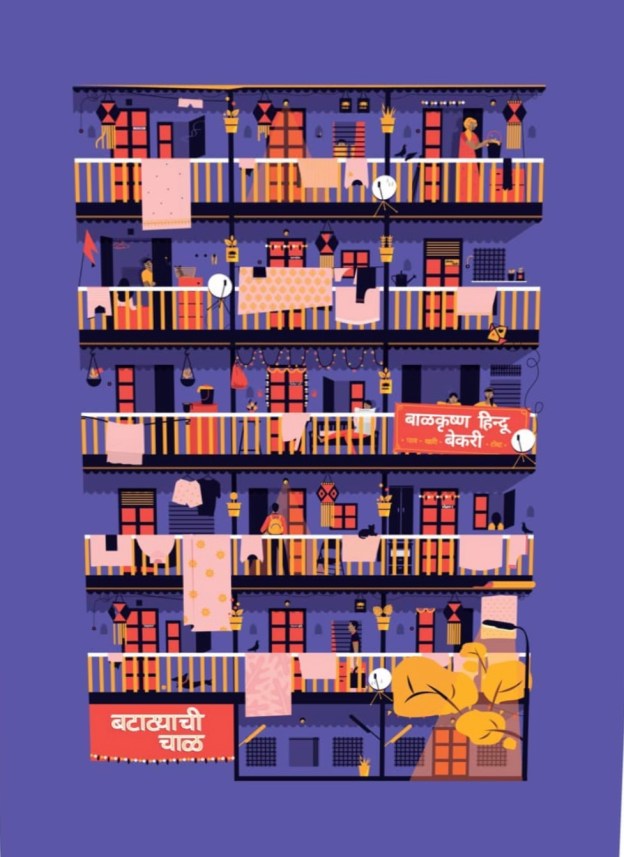
featured image: Batatyachi Chaal by Priyanka Karyekar (L) source; the culture gallery (R) source; Rastah/photographer, Rabia Ayub

Hindi films

Having no family in a 30-mile radius means creating and relying on an army of sitters. 

One of my mandates for a sitter is no screen time for Shyla; I’m starting to appreciate the irony in this because outside of homework almost all my time spent with Mataji involved watching Hindi films. Yes Hindi not ‘Bollywood’ films as what they started to ubiquitously be termed in the 90’s. Not surprisingly coinciding with the economic liberalization of India whose goal was to attract more foreign investment. This intrusion of the west brought with it a standardization of beauty and a resurgence of a post-colonial hangover transforming once again India’s sense of ‘Self’.

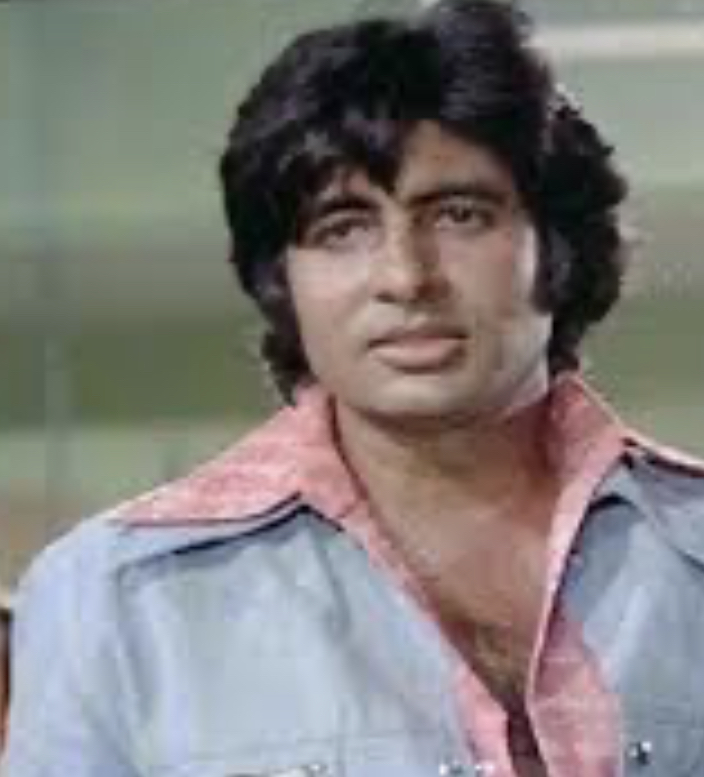
When I was young there was no need for the books I seek for my child; advocating emotional intelligence by illustrating that her heart can be pink with love, green with anger or yellow with courageousness. Instead I had Amitabh Bachchan. Undoubtedly one of the most influential actors in world cinema, and as child born in the 70’s I watched this star rise. He could be a romantic, an angry young man, a comedian and voice of reason. The Indian lens would deliberately loom over an actor’s face for an exaggerated response and contemplation in an eight year old. Not having the sophistication to gauge what was transpiring without fail l would incessantly ask Mataji as to what they were the thinking——and to this day it still surprises me that she responded every time. In the process I learned about human nature and cultural idioms. 

I recognize the same curiosity in Shyla and now question whether I should incorporate Bollywood in her life as a means to introduce some form of culture and language in a world deficient of such.

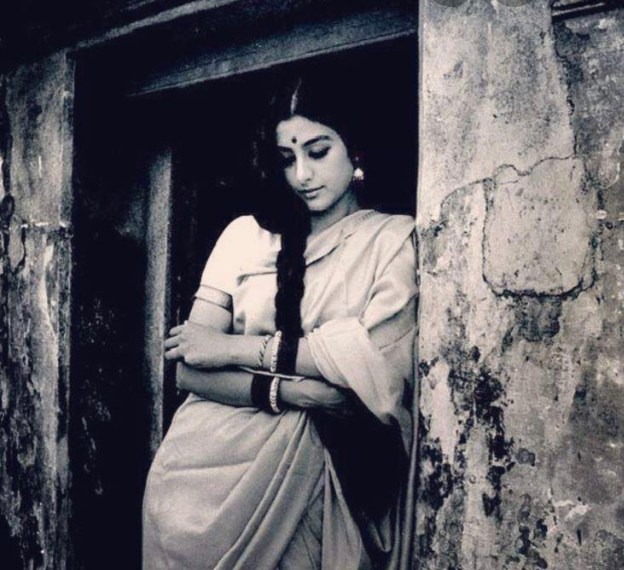
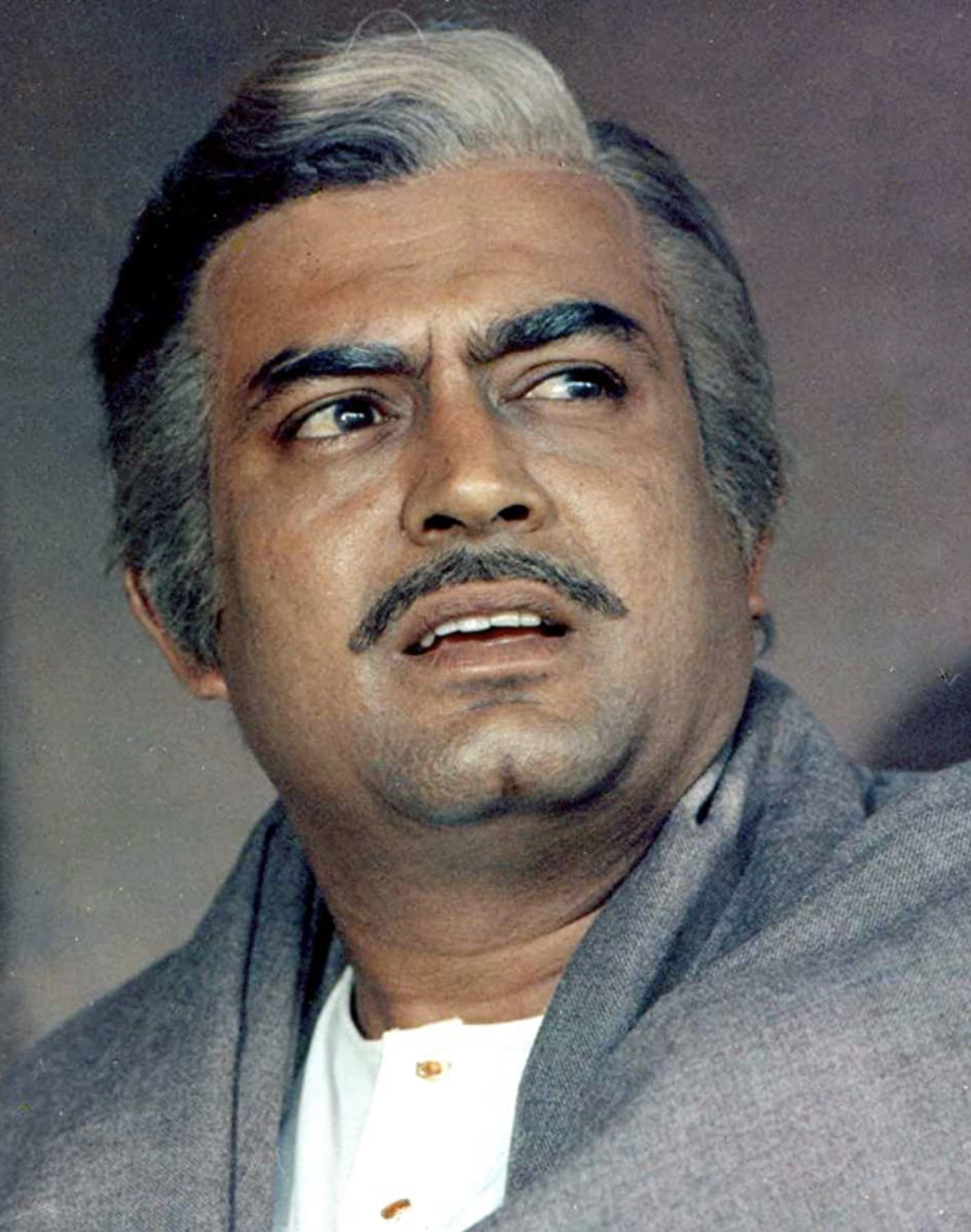
feature image: Tabu, a scene from Iruvar /new Indian express; images from top left: Sholay movie poster, amazon; Sanjeev Kumar imdb; Shashi Kapoor /the culture trip; Amitabh Bachchan/ India Today; Dharmendra-Sharmilla Tagore in scene from Anupama /dailyo

Hello!

I was told my Godmother had an uncanny ability to draw people out; resurrecting any wallflower. I would like to believe this stemmed from a coalescing of genuine interest and astute questions bringing forth a connection. This is something my daughter at the age of three was encouraged to seek in classmates and enthusiastically voice—thereby dissolving differences and promoting likeness. I marvel at how unwittingly her school tries to cultivate in toddlers some very profound and complex Vedantic philosophies, whose tenet resides in transcending individuality and the belief that one soul exists and unifies all living beings. I have discovered in connecting my daughters to my experiences, the cultural distinctions start to blur…

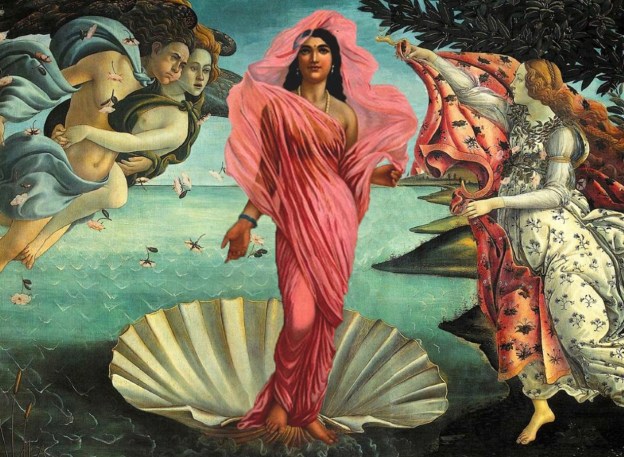
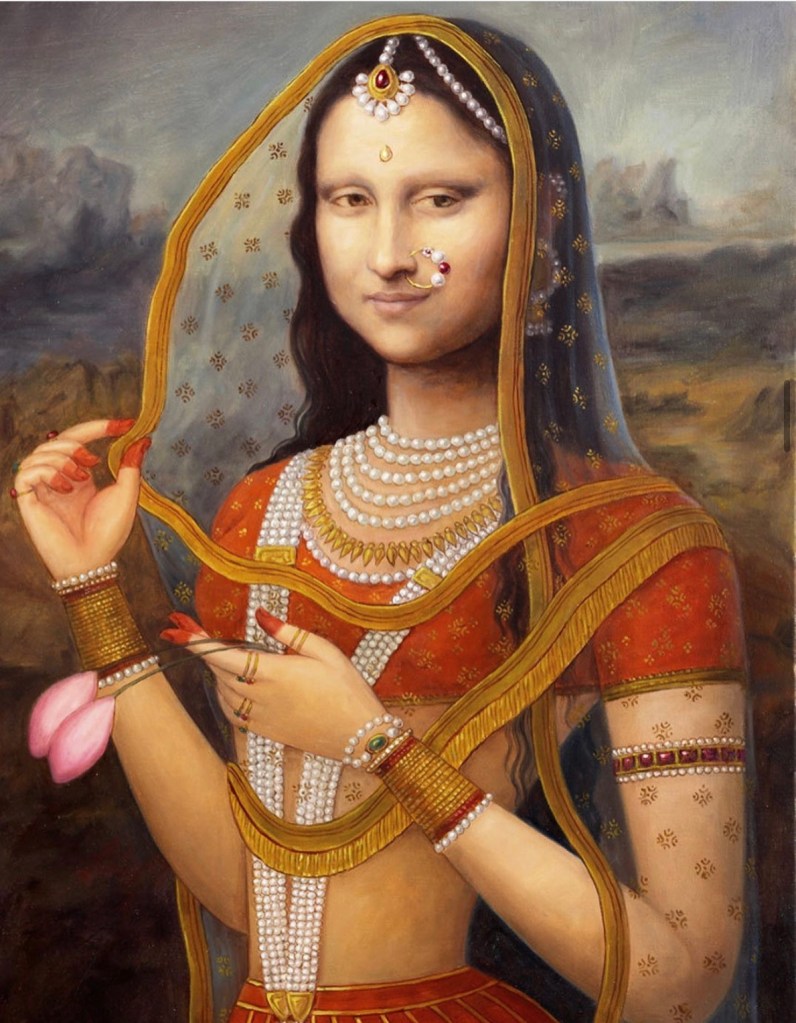
featured image: Modesty: Birth of Venus x Padmini by Adrita Das (L) Bani Thani by Gopal Swami Khetanchi/Curiator Erik Maell writes of Khentanchi, His appreciation of India’s rich and colorful history remains evident throughout his paintings, particularly his admiration of brave warriors and his fondness for the unparalleled beauty of Rajput women, as referenced in his Mona Lisa reinterpretations. (R) Kanya Kunwari by Psycollagist

(L) Disney princesses in Sabya Sachi official summer 2020 modern Sangeet Collection by Sookham Singh (R) Starbucks cup by Rashmi Krishnappa