Tag Archives: indians

Exposition

An inordinate amount of time has been devoted to installing an industrial exhaust hood in our kitchen – its sole purpose to eradicate all aromatic evidence of fried onions and blistered garlic; basic constituents of most Indian recipes.

Such an addition seems redundant considering rich cashew based Kormas and glistening ghee’d rotis have long been forsaken for healthier alternatives. Extinguishing these endangered culinary odors, almost serves to mask my cultural identity.

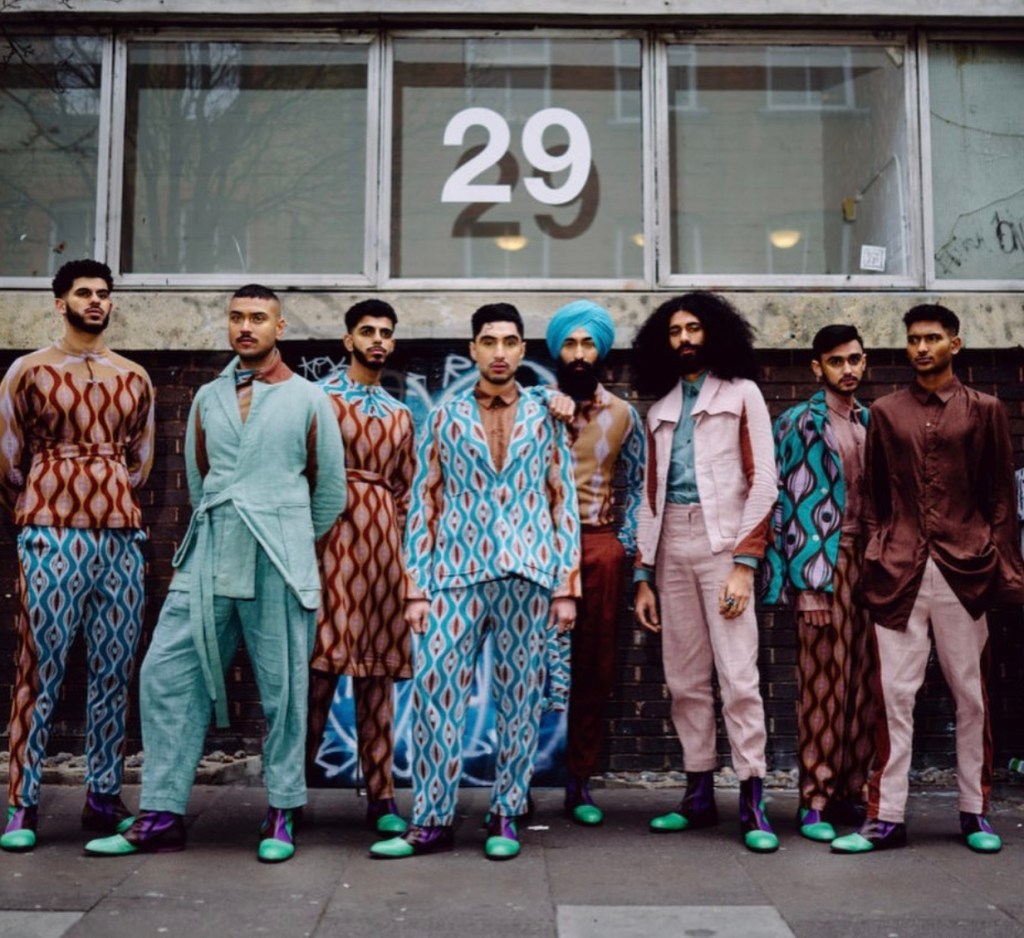
feature image:  Miss Hybrid 3 by Shirin Aliabadi source: The Third line Gallery/ highlights the dual existence of young women and the ways in which they adapt their private lives to the public sphere. Iranian girls and women—dolled up and adhering to the mandatory Islamic dress code as minimally as possible…“passive rebellion” against state-imposed morality is palpable. Source: The Art Newspaper above images: Designer @rahemurrahman / The British-Bangladeshi designer when flicking through family photographs, saw the trajectory of struggle and change his loved ones had gone through. The first few were of his family when they immigrated from Bangladesh to the UK in the late 1980s and initially stayed in a hostel — eight people in one room. The next were of his family in their first English council flat in London, and so forth. “With the damask wallpaper, people now see it and think it’s connected to our Asian roots but actually it was us fitting in and being super English. The differences are in the small nuances: you couldn’t just have a floral border and paint the rest of the wall, you had to have the two wallpaper options with the gold trim so it was entirely covered, that’s what made it extra and South Asian.” Source: @southasiannation

Not long ago, a friend and I were at a gallery (The Muted Horn) that masquerades as a home in a defunct warehouse. Exhibitions when showcased, are curated with thought-provoking cuisine in direct relation to the work. Most recently a Sudanese Muslim artist from Chicago’s pieces were displayed. At its core it depicts a lifelong struggle with her mother’s requisite for piety and her penchant for autonomy.
This was further emphasized by traditional Sudanese fare laden with decadent peanut sauces, intentionally weighing down the observer to experience the heavy psychological burden of the artist.

It is a nod to a place known as, The Conflict kitchen in Philadelphia, which defines itself by rotating meals from regions in conflict with America. Here, food becomes an overture for art – dissolving prejudges with deliciousness and in the process creating a space for profound conversations and expositions.
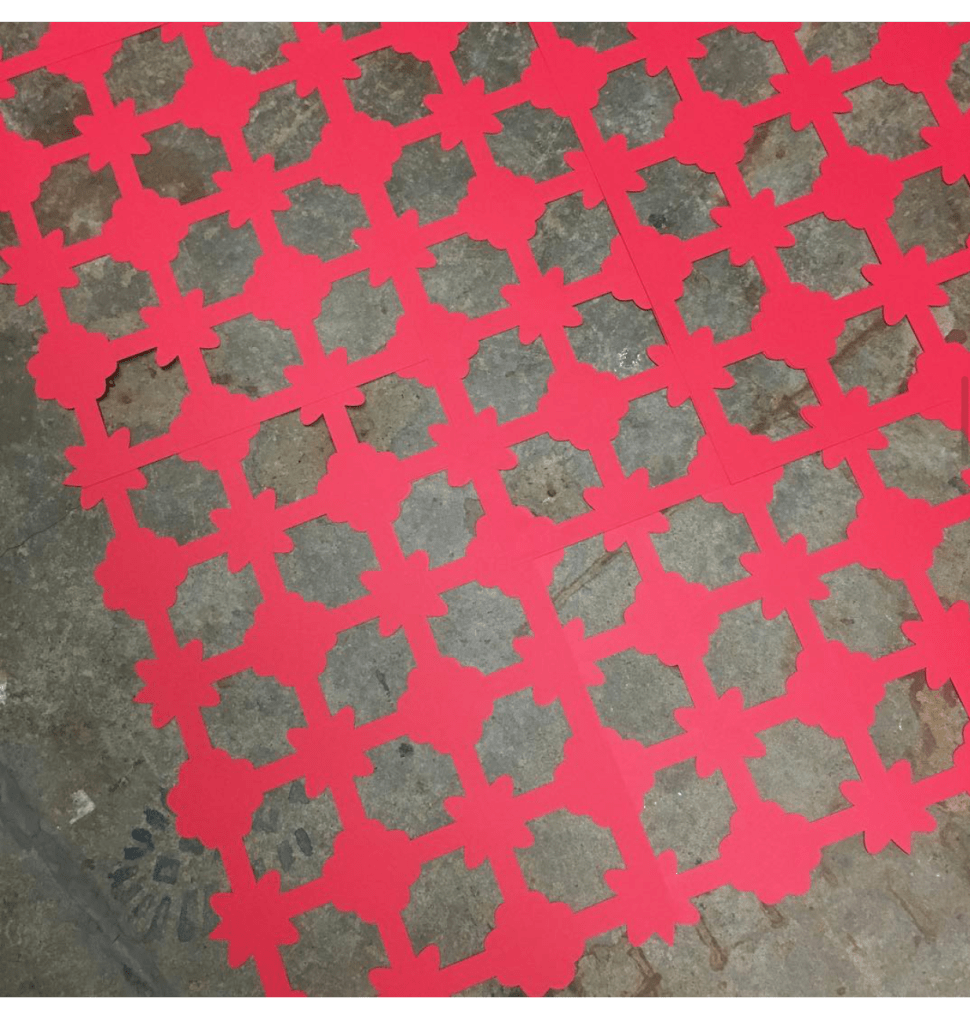
(L) Headgear by Shiraz Gallab source: The Muted Horn / is a collection of passages that float around the topics of childhood and indifference while set in a cross-cultural haze source: shirazn.es (R) The Spark by Sahand Hesamiyan source: Parasol unit / His works—large, reclining vessel-like sculptures, each channeling a veritable universe of elaborate, repetitive patterns that recall Islamic architecture—have been likened to everything from vaulted domes and futuristic pods to ornamental projectiles. They conjure references to Sufism, metaphysics, symbolism and spiritualism, and are sculptural marvels, sprung as much from engineering as from poetics. Source: ArtAsiaPacificMagazine
NHS

Upon completing their medical education in the 60’s, my neighbors emigrated from India to practice in Britain. Their English-nuptials, a ceremony without family, exemplified how progressive and unorthodox they were; yet, their forward-thinking spirits were marred in the face of archaic colonial racism, ultimately driving them to the United States.

Ironically, at least some of the onus stems from the emergence of the socially minded, National Health Service (NHS). Though ideal in merit, the NHS partook in insidiousness – hiring South Asian physicians (from British modeled schools) to occupy less coveted specialities in unsavory environments was strategic.  Perhaps unwittingly, it had become the backbone of a system designed to allow British citizens to flourish while enabling a covert tradition of indentured servitude. This was the educated migrant’s struggle, resembling that of the unskilled worker. Whether it was working for the Nestle factory or NHS, the lack of wages, support and upward mobility highlighted the prevalence of discrimination.

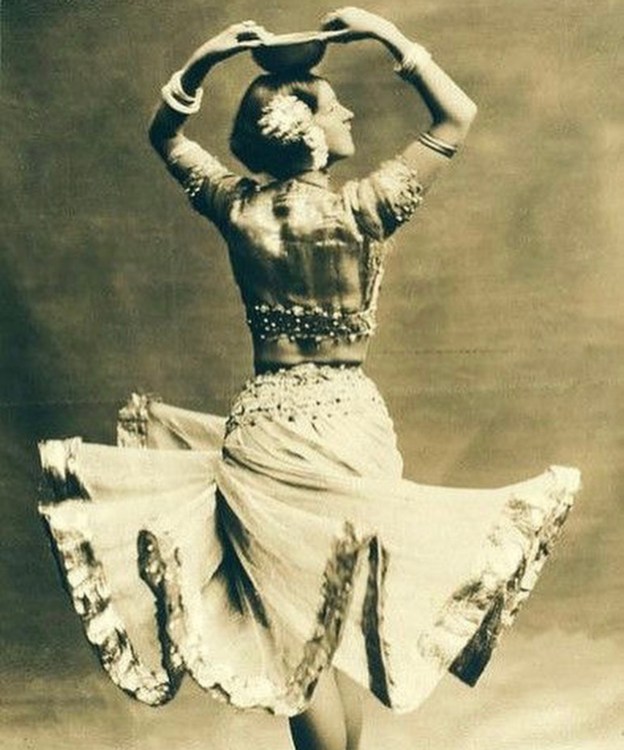
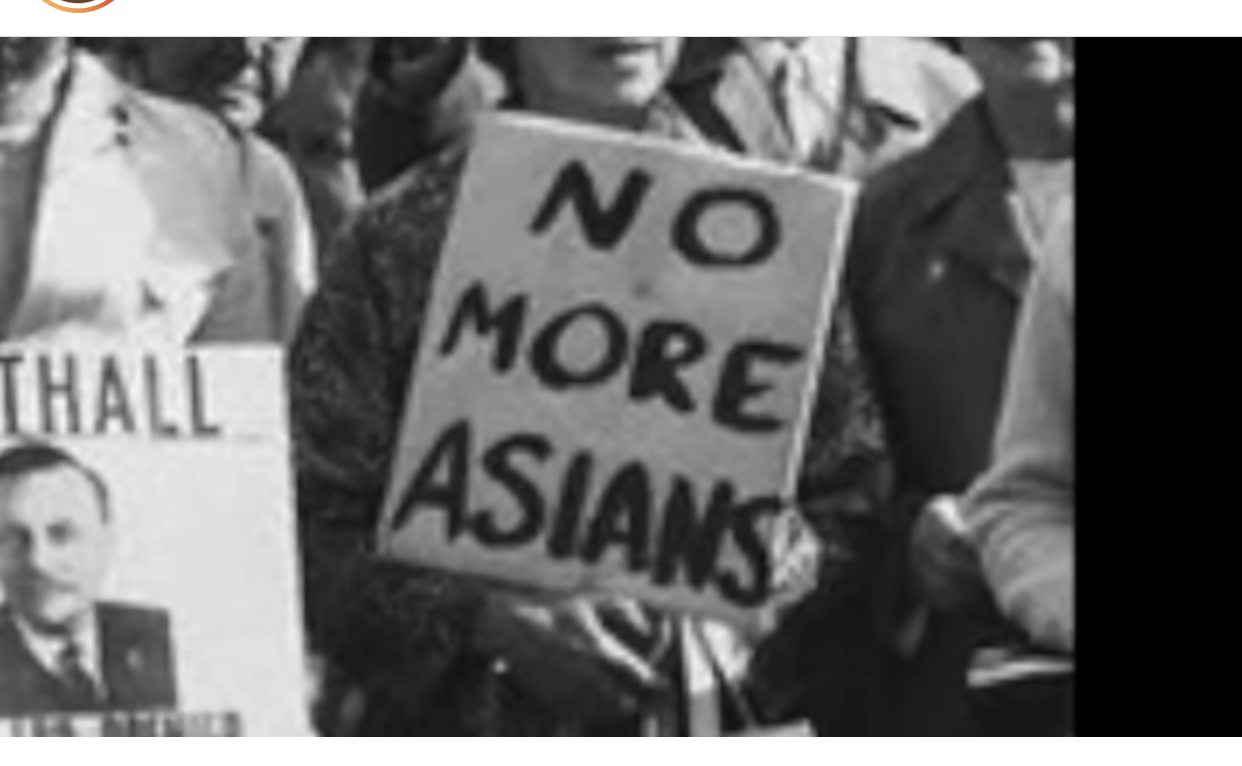
featured image: Ruth Saint Denis (1879 – 1968) was an American modern dance pioneer who was deeply attracted to the folk dance of India. Her first ‘oriental’ performance in 1906 was from a Radha-Krishna poem. St. Denis believed dance to be a spiritual expression, and her choreography reflected this idea. Source: New York public library. above images: In 1979, the National Front (NF, an outspoken racist political party) intentionally held a meeting in Southall, where a large South Asian community resided; knowing there would be protests and free publicity for their campaigns. In the clashes that followed between 3,000 protestors and 2,800 police officers, hundreds of arrests were made, and many injured. This event would later be known as the Southhall riot of 1979. Three years earlier, Gurdip Singh Chaggar had been murdered in the same area in a racist attack. After his death, one of the NF leaders said “One down, one million to go.” Later, a judge would rule that this did not incite racial hatred. Source: discoversociety.org

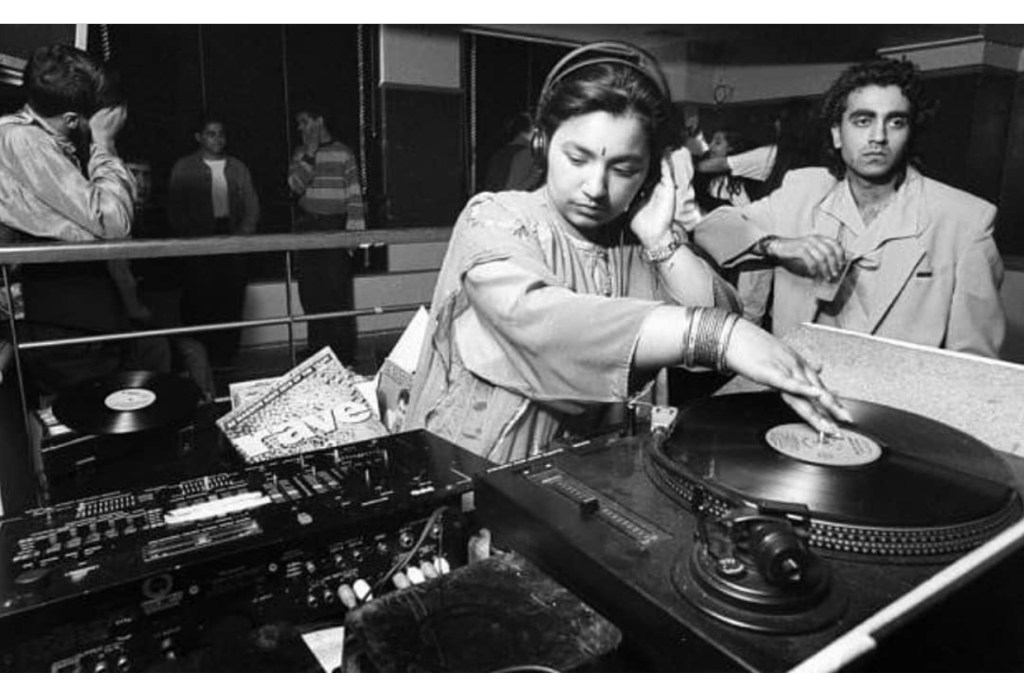
Almost Twenty years later, some from my generation pioneered a phenomenon known as ‘Day-jams’ or ‘Daytimers’.  Deeply seated in this premise was a rebellious response to conservative parents tethering their adolescents.  Inadvertently, these recurring events served as a cultural haven where South Asians no longer felt different or marginalized.  Fascinatingly, this movement developed concurrently across the globe – Toronto, London and South African cities– in an era prior to ubiquitous Global connectivity.

above image; flyer for an event Apache Indian would be performing at in Toronto, source: P. Paniker

As the name suggests, Indian youth frequented these events to party in a club, while school was in session.  The music in these Day-jams itself generated a liminal space where freedom was personified by the likes of England’s Apache Indian and Bally Sagoo — progenies of the working class who migrated in the 60’s and 70’s to Punjabi ghettos. They reimagined familiar Bhangra and Hindi music with reggae, soul, and rap, resulting in anthems for South Asians generating solidarity and contending visibility.

Systems were structured to denigrate immigrants—- a rejection that percolated through generations of South Asians at every level. And In spite of this they persevered, finding and forging their niches.

(L) Rani Kaur, aka DJ Radical Sister, mixing records at a day timer in the 90s. Photograph by: Tim Smith, Source: The Guardian (R) a scene from, director and actor Riz Ahmed’s 2016 short film Daytimer