On returning from a soiree, a friend commented on how ‘Canadian-Indians have a good balance.’ This was followed by ‘you want Indian friends that aren’t too Indian, but you don’t want them if they aren’t Indian enough!’ And therein, she succinctly contained our thoughts, a subjective threshold based on a hyphenated identity.
One of the many repercussions of belonging to a former British colony is a fallacy of one’s idea of self. Despite having the most globally significant democracy, India does not have a national language as with most former colonies. Consequently, the knowledge and usage of English becomes a currency to evaluate and discriminate, continuing a tradition of hierarchy
feature image: Simryn Gill, ‘Water Drawing #17‘, 2021, ink on paper. This drawing project is prompted by Charles Darwin’s 1837 sketch ‘Tree of Life’ in which he scribbled down a framework for his speculations in one of his early ‘transmutation’ notebooks. This intuitive drawing of an evolutionary tree is headlined by the words “I think” and is a precursor to Darwin’s radical theory of evolution, common descent, differential survival and natural selection.Kallat invites artists and audiences to consider if Darwin first wrote the words “I think” and then – when words could not capture his emergent thoughts – proceeded to draw, or if the drawing preceded the words. above image: from @indiaartfair, via ritukumarhq; ‘India is known as a glorious melting pot of people, cultures, and beliefs. Diversity and equality are fundamental to our founding principles.’
I am constantly fascinated by Hispanics, who, upon meeting one another, naturally erupt into Spanish, stranger or not. It would be unconventional for me to partake in something akin, regardless of being fluent in three South Asian dialects. So much so that if a contemporary greeted me with a ‘Namaste,’ I would be puzzled.
above image: galleryveda, artist: Ganesh Selvaraj “As an act of interpretation, we approach a visual and apply a metaphor. So first, we see a reference, and then we try to interpret it
Language imparts culture, but our mundanity sublimates our heritage. Indians dispose of Styrofoam and redistribute takeout in proper serve-ware when hosting. Ukrainians disdain the legal formality names evoke thus Aanya transforms to Aan-ichka. Similarly, Latinos add suffixes’: Juan-ito, Hernan-cito, Ev-ita, and Laur-ita, diminutive sounding forms yielding a burst of love. And when Persians meet, it’s customary to inquire how relatives are faring; this can last up to an hour.
I would like to believe generations have taken turns depositing small aggregates of an immutable sense of who we truly are.
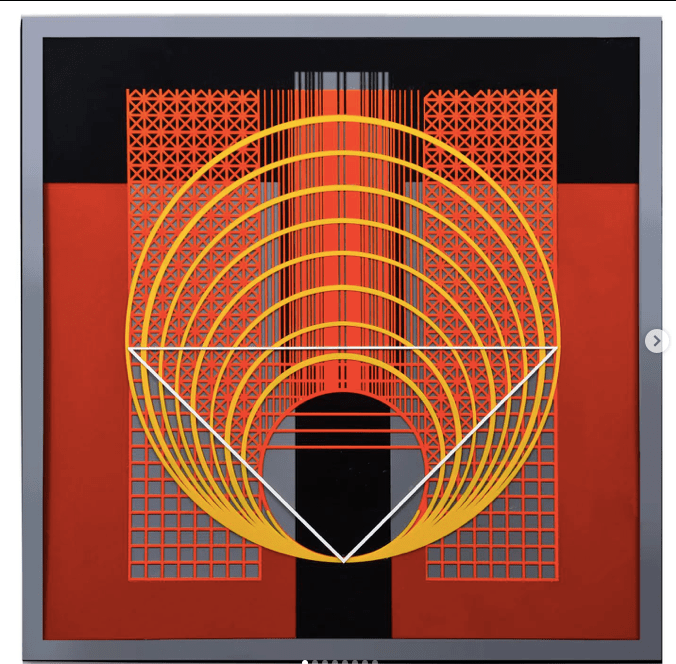
above image: galleryveda, artist: Alagarraja ponniyah. In his works he represent the timeline in the minds of the viewers to reflect our history, present, and our future. He used reflective materials to not only reflect the objects placed before it, but also human emotions and constant changes of time. It depicts the visuality of human emotions in today’s world. He believes that if the world is a mirror of our inner world, any emotion we experience in our world is a reflection of our thought patterns and actions. The mirroring phenomena he explores are also the dualities of history and future, technology and environment.
When Barak Obama first campaigned, some were disgruntled as his ancestors lacked the history of slavery as theirs. Their matching skin tones was not enough of a bond—communal suffering has the power to bind. Trauma becomes the hallmark with which they recognized one another, as with the numeric sequences on the camp survivors.
feature image: ‘Transit’ by Vala B Shende Made up of thousands of steel discs welded together, the work depicts 22 laborers in a life size truck. The rear view mirror of the truck displays footage of roadways giving the illusion of movement, but as Shende says ‘they aren’t really going anywhere.’ The piece which was conceived as a comment on migration and urbanization holds even more relevance today amid the continuing migrant crisis we find ourselves in. Is the truck carrying laborers into the city or are they in-fact being forced to leave? Shende’s father was a scrap metal merchant and the metal discs have become his signature, his language as he calls it. The shape to him representative of molecules and the reflective ability allowing the viewer to see himself in the pieces. above image: from the book Watan, which explores both sides of the Punjab by Graciela Magnoni. “One thing that was clear to me after so many trips to Punjab is that after 75 years of separation, both sides still miss each other and long for connection.”
What is intriguing is no matter how much we orient ourselves differently than our forbearers, we seem to be in a perpetual state of ‘dis-orientation,’ relentlessly trying to capture our cultural legacies. This was evidenced by a friend’s Chicagoan father, who fiercely devoured news of India while unaware of American breaking news headlines. Contrarily, another, having friendships that spanned decades, yearned for a Caucasian fraternity in Toronto. A quiet reminder that acceptance does not always translate to belonging. Now a private literary club member, one wonders if he is taunting the WASP majority to look beyond his skin color and recognize their similarities.
With tears welling up, my brother’s mother-in-law once shared how children called her DP a “displaced person” in school. The Irony being she is Canadian-born to Slovanian parents and phenotypically white. And yet six decades later, her pain conveys she was never Canadian enough.
above image: ‘Burden’ by Rupy C. Tut. “Silence is a burden women have carried for too long. In this work, I reflect on their silence, their story, and their convenient absence from the narrative we are told.”
When young, the metaphor of Canada being a tossed salad was widely taught. Theoretically, our diverse identities are celebrated, the parts making up the whole mosaic. Though since coined in the 20s, studies illuminate the mosaic is not as horizontal as the diverse architectural figures in city landscapes but relatively vertical where certain groups preside and are overrepresented in influential decision-making positions.
Caught in the cultural shift, new immigrants must decide who they are. Some stay tethered to their native country, while others’ penchant for assimilation never diminishes.
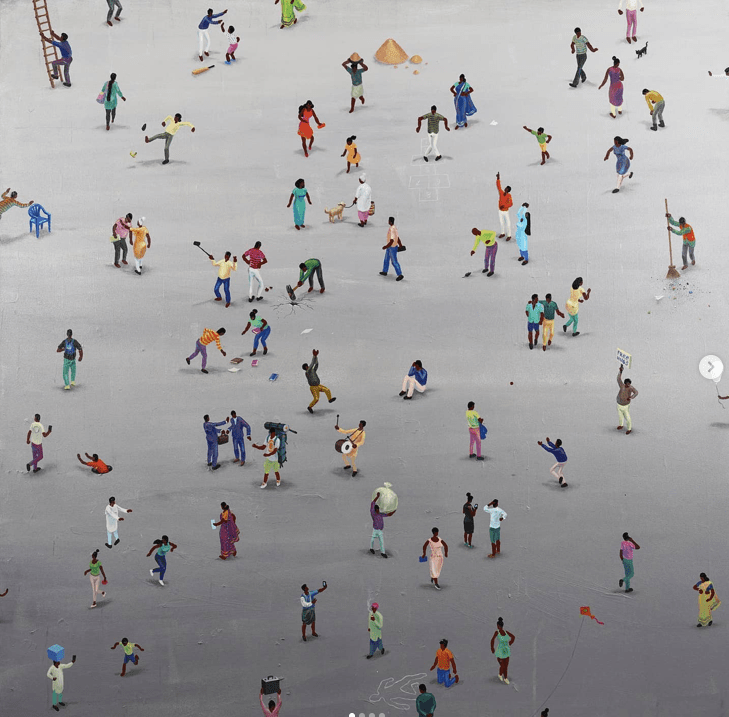
Above image: A Man Of The Crowd (2017), by Sam Kulavoor titled, instagram
An inordinate amount of time has been devoted to installing an industrial exhaust hood in our kitchen – its sole purpose to eradicate all aromatic evidence of fried onions and blistered garlic; basic constituents of most Indian recipes.
Such an addition seems redundant considering rich cashew based Kormas and glistening ghee’d rotis have long been forsaken for healthier alternatives. Extinguishing these endangered culinary odors, almost serves to mask my cultural identity.
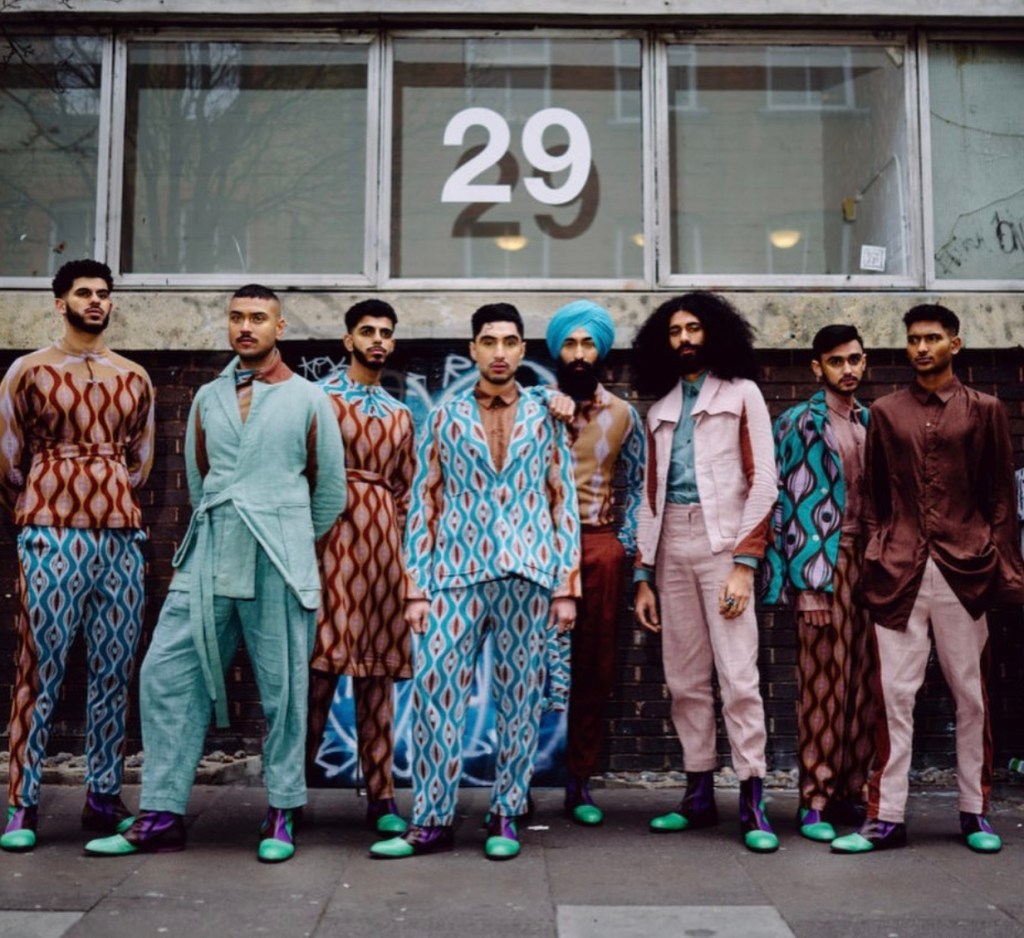
feature image:Miss Hybrid 3 by Shirin Aliabadi source: The Third line Gallery/ highlights the dual existence of young women and the ways in which they adapt their private lives to the public sphere. Iranian girls and women—dolled up and adhering to the mandatory Islamic dress code as minimally as possible…“passive rebellion” against state-imposed morality is palpable. Source:The Art Newspaper above images: Designer @rahemurrahman / The British-Bangladeshi designer when flicking through family photographs, saw the trajectory of struggle and change his loved ones had gone through. The first few were of his family when they immigrated from Bangladesh to the UK in the late 1980s and initially stayed in a hostel — eight people in one room. The next were of his family in their first English council flat in London, and so forth. “With the damask wallpaper, people now see it and think it’s connected to our Asian roots but actually it was us fitting in and being super English. The differences are in the small nuances: you couldn’t just have a floral border and paint the rest of the wall, you had to have the two wallpaper options with the gold trim so it was entirely covered, that’s what made it extra and South Asian.”Source: @southasiannation
Not long ago, a friend and I were at a gallery (The Muted Horn) that masquerades as a home in a defunct warehouse. Exhibitions when showcased, are curated with thought-provoking cuisine in direct relation to the work. Most recently a Sudanese Muslim artist from Chicago’s pieces were displayed. At its core it depicts a lifelong struggle with her mother’s requisite for piety and her penchant for autonomy. This was further emphasized by traditional Sudanese fare laden with decadent peanut sauces, intentionally weighing down the observer to experience the heavy psychological burden of the artist.
It is a nod to a place known as, The Conflict kitchen in Philadelphia, which defines itself by rotating meals from regions in conflict with America. Here, food becomes an overture for art – dissolving prejudges with deliciousness and in the process creating a space for profound conversations and expositions.
(L)Headgearby Shiraz Gallab source: The Muted Horn / is a collection of passages that float around the topics of childhood and indifference while set in a cross-cultural haze source: shirazn.es(R) The Spark by Sahand Hesamiyan source: Parasol unit / His works—large, reclining vessel-like sculptures, each channeling a veritable universe of elaborate, repetitive patterns that recall Islamic architecture—have been likened to everything from vaulted domes and futuristic pods to ornamental projectiles. They conjure references to Sufism, metaphysics, symbolism and spiritualism, and are sculptural marvels, sprung as much from engineering as from poetics. Source: ArtAsiaPacificMagazine
Upon completing their medical education in the 60’s, my neighbors emigrated from India to practice in Britain. Their English-nuptials, a ceremony without family, exemplified how progressive and unorthodox they were; yet, their forward-thinking spirits were marred in the face of archaic colonial racism, ultimately driving them to the United States.
Ironically, at least some of the onus stems from the emergence of the socially minded, National Health Service (NHS). Though ideal in merit, the NHS partook in insidiousness – hiring South Asian physicians (from British modeled schools) to occupy less coveted specialities in unsavory environments was strategic. Perhaps unwittingly, it had become the backbone of a system designed to allow British citizens to flourish while enabling a covert tradition of indentured servitude. This was the educated migrant’s struggle, resembling that of the unskilled worker. Whether it was working for the Nestle factory or NHS, the lack of wages, support and upward mobility highlighted the prevalence of discrimination.
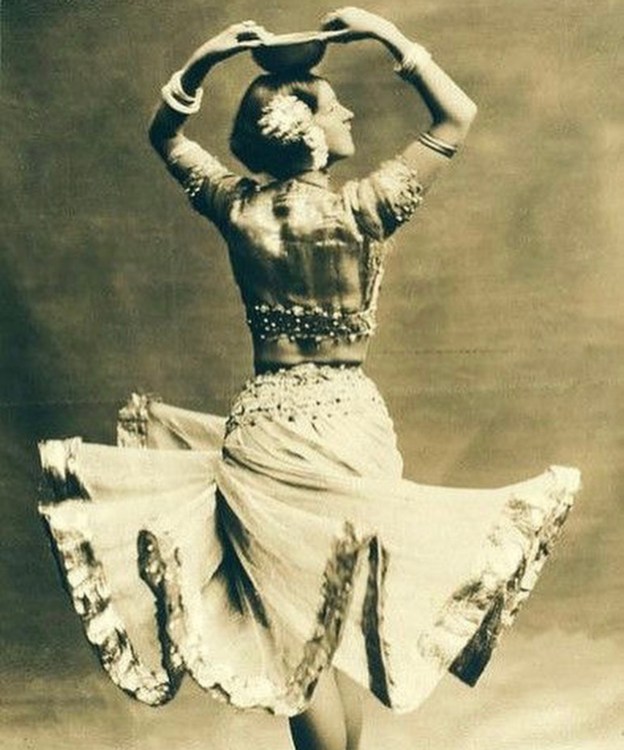
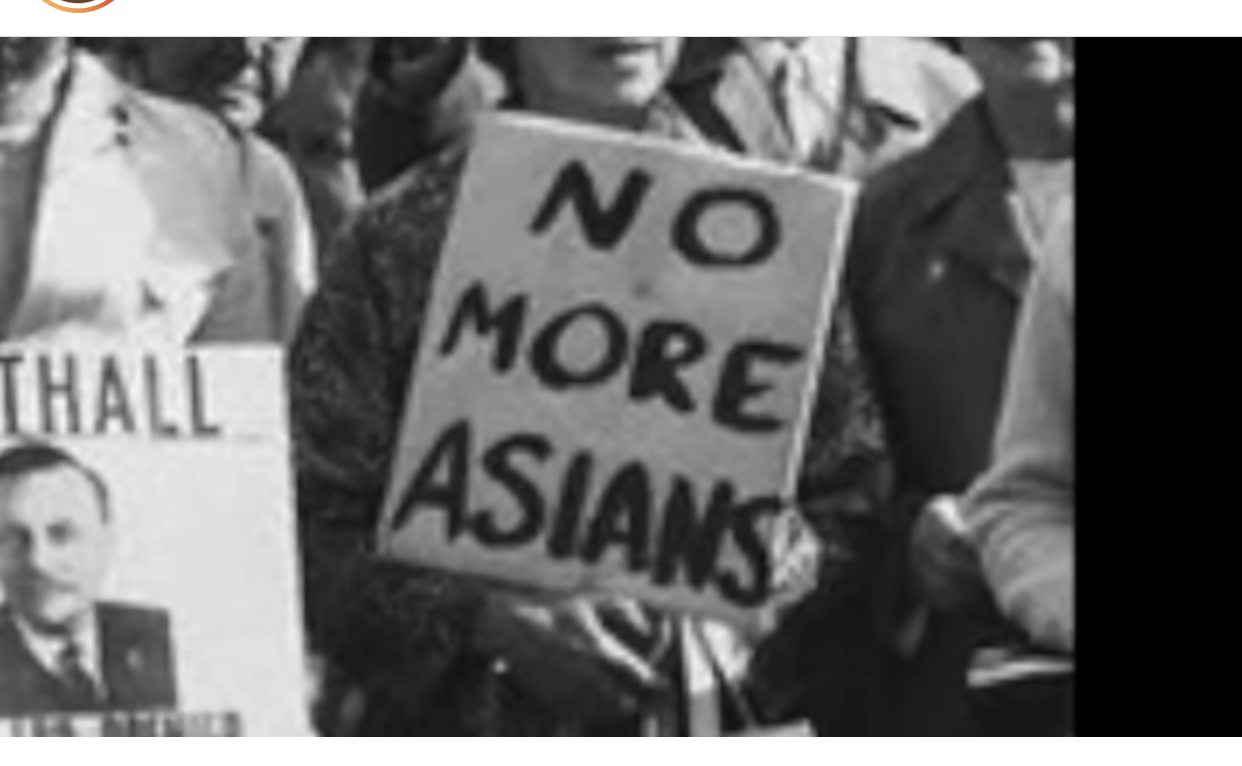
featured image: Ruth Saint Denis (1879 – 1968) was an American modern dance pioneer who was deeply attracted to the folk dance of India. Her first ‘oriental’ performance in 1906 was from a Radha-Krishna poem. St. Denis believed dance to be a spiritual expression, and her choreography reflected this idea. Source: New York public library. above images: In 1979, the National Front (NF, an outspoken racist political party) intentionally held a meeting in Southall, where a large South Asian community resided; knowing there would be protests and free publicity for their campaigns. In the clashes that followed between 3,000 protestors and 2,800 police officers, hundreds of arrests were made, and many injured. This event would later be known as the Southhall riot of 1979. Three years earlier, Gurdip Singh Chaggar had been murdered in the same area in a racist attack. After his death, one of the NF leaders said “One down, one million to go.” Later, a judge would rule that this did not incite racial hatred. Source: discoversociety.org
Almost Twenty years later, some from my generation pioneered a phenomenon known as ‘Day-jams’ or ‘Daytimers’. Deeply seated in this premise was a rebellious response to conservative parents tethering their adolescents. Inadvertently, these recurring events served as a cultural haven where South Asians no longer felt different or marginalized. Fascinatingly, this movement developed concurrently across the globe – Toronto, London and South African cities– in an era prior to ubiquitous Global connectivity.
above image; flyer for an event Apache Indian would be performing at in Toronto, source: P. Paniker
As the name suggests, Indian youth frequented these events to party in a club, while school was in session. The music in these Day-jams itself generated a liminal space where freedom was personified by the likes of England’s Apache Indian and Bally Sagoo — progenies of the working class who migrated in the 60’s and 70’s to Punjabi ghettos. They reimagined familiar Bhangra and Hindi music with reggae, soul, and rap, resulting in anthems for South Asians generating solidarity and contending visibility.
Systems were structured to denigrate immigrants—- a rejection that percolated through generations of South Asians at every level. And In spite of this they persevered, finding and forging their niches.
0(
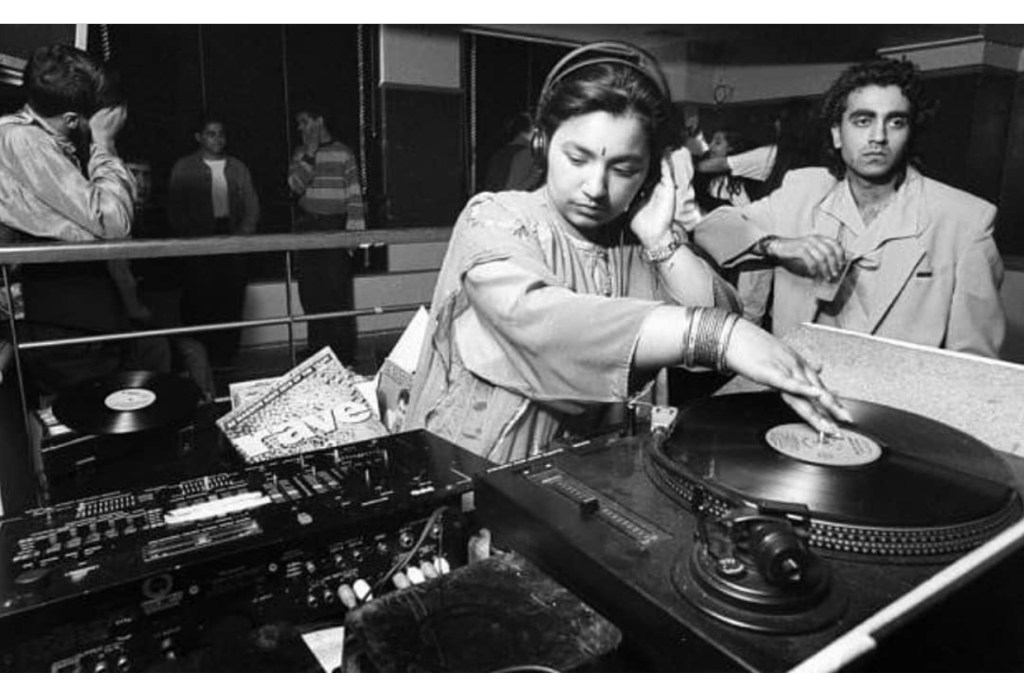
(L) Rani Kaur, aka DJ Radical Sister, mixing records at a day timer in the 90s. Photograph by: Tim Smith, Source: The Guardian (R) a scene from, director and actor Riz Ahmed’s 2016 short film Daytimer
“Don’t say ‘uncle’ just call me Ashok!” I shuddered every time I heard this as Indians refrain from addressing their elder’s by name.
The notion of respect is deeply entrenched in South Asian culture. Every relationship is given a title of veneration. This reverence is not limited to people but also transcends onto inanimate objects: money, food, books and divine images topped the hierarchy creating a parallel caste system. As children, if any were treated recklessly, we were admonished and required to touch the object with our forehead to absolve ourselves.
I once read how in India there was a residential building whose sidewall had become a makeshift urinal. Unbearable pungent odors led the inhabitants to place prohibiting signs in vain. Only when the trifecta of Hindu gods –Bramha Vishnu & Shiva, were painted did the dual use of the wall cease. It remains to be determined whether respect or fear was the driving force.
feature image: Perception and Reflection by Rana Begum’s, source; Art-agenda /Comprised entirely of reflectors, her work describes our ever-evolving built environment. Inspired by the straightforward patterns and vibrant colors of roadsigns and the way in which their surfaces shift as the day progresses, these works too shift and change as light exposure varies and as viewers walk around them. aboveimage: photograph by Steve McCurry
This year, we celebrated the auspicious penultimate day of Navratri with friends. What became apparent was our fallacy in assuming (recently) naturalized Americans would have a thorough knowledge of religious and cultural rites. I started to recognize the breakdown in the transmission of information from one generation to the next.
Recalling how after 25 years, when Sri returned to Sri Lanka, he hoped to learn why consuming meat on Fridays was disdained. Much to his chagrin he discovered no-one knew; generations had yielded without questioning. I began to consider that perhaps when respect is mandated, a divide may manifest, impeding conversation and preventing vertical integration.
One afternoon while on the front lawn of our new home, a neighbor approached us and Shyla exclaimed, ‘that’s Sashi!’ As she drew closer, I noticed she was about my mother’s age and I whispered ‘Sweetie say Sashi aunty’ and she persisted ‘Sashi!’ Could dropping the honorifics break down barriers?
(L) Three Women by Jamini Roy (1887-1972), source; British museum / This particular work is one of Roy’s iconic images: that of Bengali women. Roy is critical to any narrative of the development of modern Indian art in the early 20th C when there was a frantic search for roots and identity. Roy turned away from prevailing styles and looked back to the visual stimuli of his childhood: the folk arts of Bengal. He used this storehouse of forms to create a new pictorial language, irrevocably Indian in execution and feeling, yet simultaneously modern in its treatment of the two-dimensional reality of the picture plane(M) piece by Maria Qamar, source; hatecopy(R) In Myanmar, Colgate prints interactive educational information in toothpaste boxes design by; redfuse and Young & Rubicam, source; border and fall
When younger, I was led to believe my name translated to ‘the dear one/beloved’. Only once Sanskrit lessons were commissioned did I learn its literal meaning, ‘one with pleasing manners’. Thus, I desired an equally meaningful name for our daughter. For a time, we were quite content with “Ishana” and even received monogrammed items, until Sri came across Freakanomics’, the power of names. Names such as Shaniqua, (God is gracious), Monifa (I am luck), Rashida (righteousness), Shanika (young), remnants of a proud African heritage, regrettably did not command the same respect in the West. In fact, they carried the weight of a millstone around the bearer’s neck. When the likes of ‘Ishana’ appears on paper there is a multitude of negative stereotypes that may ensue—forcing one to acknowledge that an impression is predetermined.
Historically, there have been more dire consequences of preconceived ideas invariably resulting in extreme measures—be it the Jewish who underwent rhinoplasties to avert being persecuted and to assimilate, or the fairer African Americans who passed by concealing their linguistic patterns and accents, while singeing their hair to eradicate its natural twists and turns. This weighed heavily on us.
Madam C. J. Walker born Sarah Breedlove; (1867–1919) was an American entrepreneur amongst other things. She made her fortune by developing a line of hair care products for black women and popularized hot combs that straightened hair. At the time of her death, she was considered the wealthiest African-American businesswoman and recorded as the first female self-made millionaire in America.
image: biography.com
For many years I crusaded against the mispronunciation of my name. I was resolute in curbing any attempts at truncating it, and defensive when some cleverly tried to call me by my Irish middle name, Darina.
Yet other South Asians from Generation-Z had an answer to this dilemma by taking cues from their Korean counterparts who existed under one name but whose birth certificate bore another. I learnt Vaishnavi was really Angela to her friends— a Hindu devotee of Vishnu became a Christian messenger of God. Where once I may have cast judgement, I now applaud this form of self-determination. After all, is not our ultimate goal to assert oneself while not being excluded?
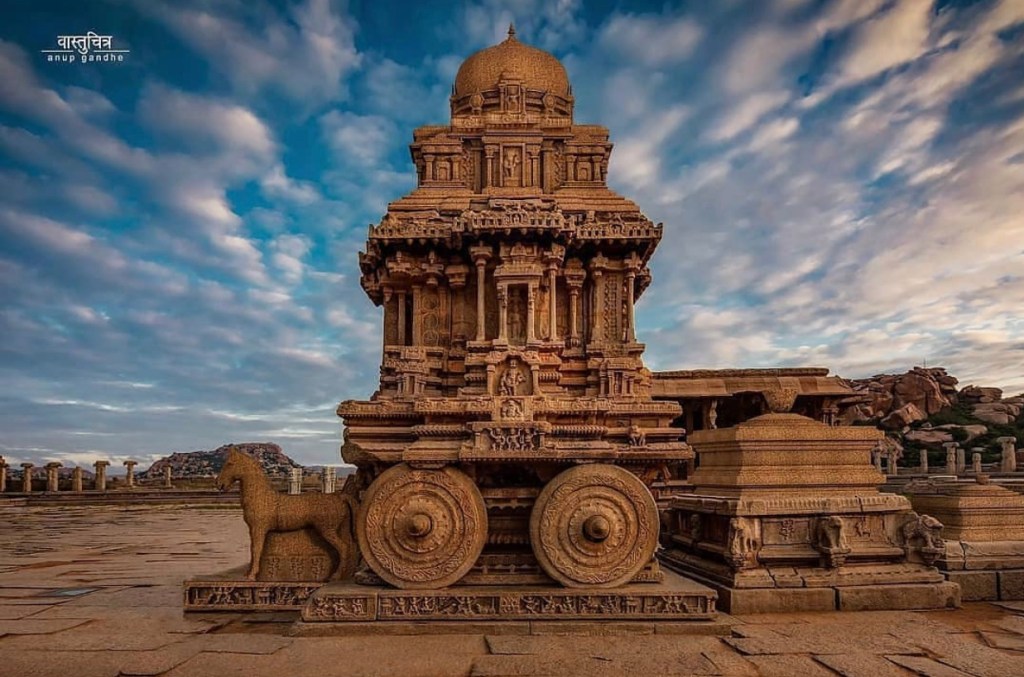
feature image: Sky mirror by Anish Kapoor, source, Joanne Gatefield /Sky Mirrorinvites us to take a step back, look up and re-think our angle. Anish Kapoor (b.1954, Bombay, India) is one of the foremost artists of our time. His sculptures extend the formal precepts of minimalism into an intensely spiritual and psychological realm, drawing viewers in with their rich colors, sensuously refined surfaces, and startling optical effects of depth and dimension. They give visceral and immediate impact to abstract dualities such as presence and absence, infinity and illusion, solidity and intangibility. Source, Public art fund (L) ‘The Stone Chariot’ by Anup Gandhi /Hampi is a medieval kingdom that served as the capital city of Vijayanagara Empire for over 200 years (~1336-1565 AD) and a UNESCO World Heritage site. According to Hindu mythology this is where Shiva and Parvati resided. Amidst its many ruins is the Chariot temple (Garuda shrine) as shown. (R) “I’ve arrived!” by ramesstudios/ Shaila (daughter of the mountains) is a manifestation of the Hindu goddess, Durga; who amongst other things is also known as Parvati.
Growing up traveling in the Indian context was quite different. Neither Film festivals, culinary experiences, nor art exhibitions determined vacation destinations; in fact, what held the most clout was where extended family resided. This was the norm. Living in a niche city such as Toronto, my parent’s home was and still emulates a subway turn stall. Consequently, I was continuously displaced from my room, and at one point, sought refuge at University of Toronto’s dormitory. There is a Hindi proverb that plays on the rhyming words of ‘guest’ and ‘god’ (Mehman Bhagwan hota hai) localizing them as one. Thus easing the parental conscious for having their child’s room usurped.
Our home was void of hotel luxuries and conveniences and yet we were always at full occupancy. I was amazed at how anyone appreciated this style of ‘traveling’. One might even speculate why real estate board’s hadn’t developed packages brokering houses juxtaposed to one another; one for the family and another for the plethora of visitors.
A Western mentality had taken over my Indian sensibilities. For It was customary during weddings to have basements converted to hostels for out-of-towners. And despite having one bathroom for every five people, no one based their overall enjoyment upon this. It seemed the more one shared their truer self the happier they were.
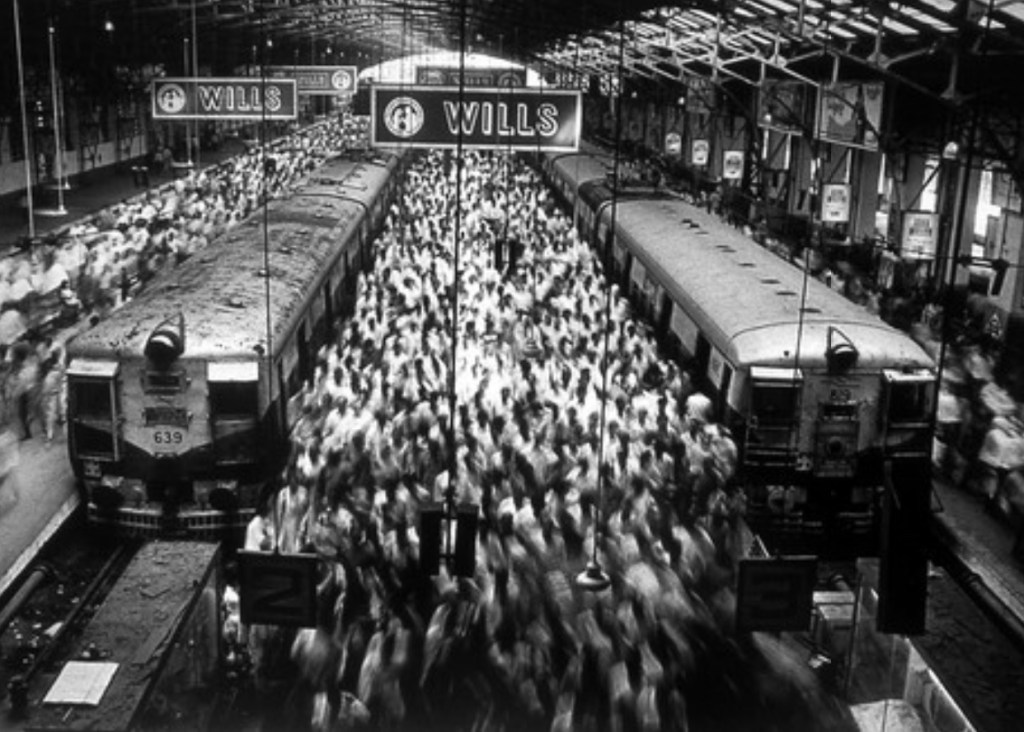
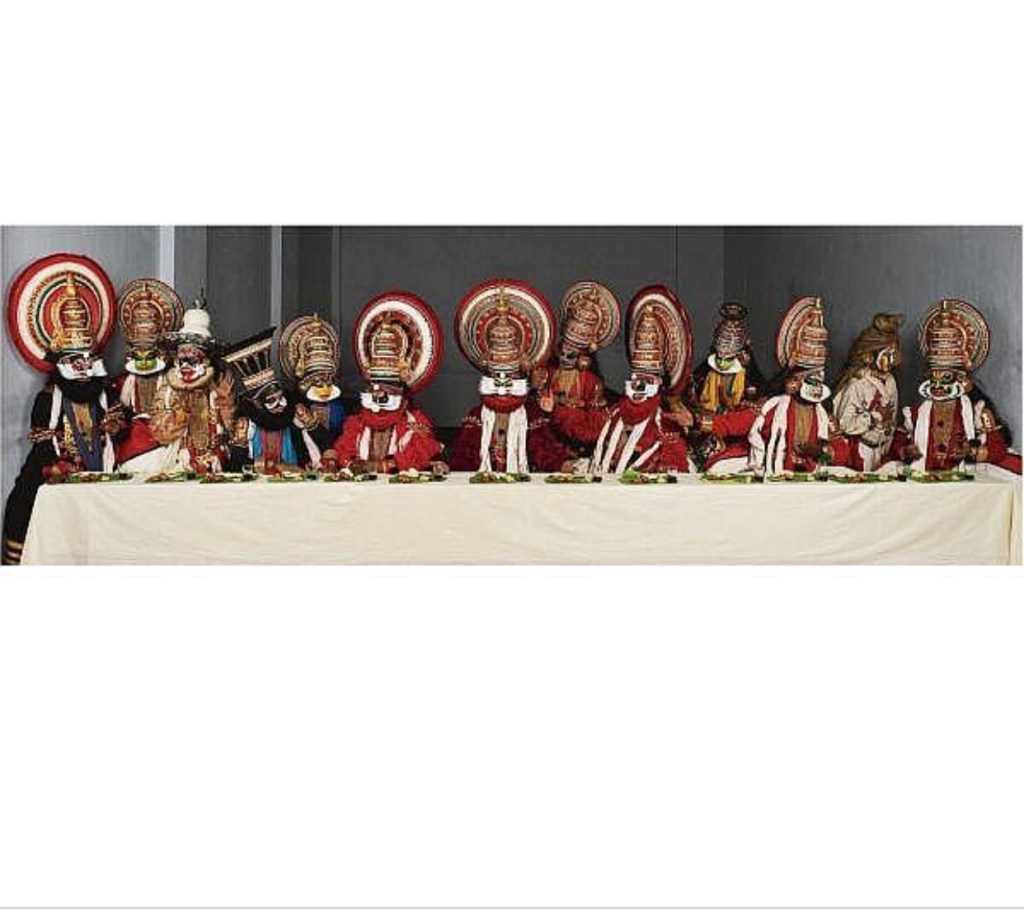
(feature image) Jaipur’s, Panna Meena Ka Kund by Melissa Hom, source, the culture gully /stepwell (L) Churchgate Station in Mumbai by Sebastião Salgado, source, Christie’s /Artspace:For his Migrations series, Sebastião Salgado poetically documented population growth and displacement around the globe. Here, commuting masses collide on the platform of one of Mumbai’s major transportation hubs, the Churchgate Station. (M) people watching a wrestling match by Poras Chaudhary /…has been intrigued by the visually striking moments, may they be special for their color, composition or just the moment’s rarity in time. (R) “Last Super” by Vivek Vilasini, source, invaluable /The Times of India reported, brings forth contemporary global concerns on the issues of faith and betrayal-even as he blends western and eastern nuances in iconography. The Kathakali dancers create a choreography of sorts, as sit at the table with the traditional banana leaf and typical Kerala sadya.
The opposite also appeared to be true. Last autumn in France a recently immigrated Indian woman summed up Parisian life as ‘too much formality.’ With disdain she spoke of having ‘to book an appointment’ to see a friend. She lamented the absence of spontaneity and begrudgingly succumbed to convenient prescribed meetings.
I’ve come to realize these aggregated inconveniences are what foster bonds. Make-shift beds, a dining table for six equipping twelve, and intimate audible squabbles all serve to make one feel truly comfortable. Perhaps this is an evolutionary vestige of a deep seeded need to live communally.
We have noticed some introversion in Shyla. Socially, at first she remains sidelined, assessing, before delving in, which can last up to two hours. When finally we are ready to depart, she engages. Then it dawned on me—maybe her natural Indian predisposition manifests not in needing frequency, but rather concentration.
I once rotated with a Radiologist from a modest background, as was her Gastroenterologist husband. Originally Indian citizens, they were now emblematic of the American dream: residing in an affluent area, privately educated children, and the ability to travel and explore interests fully. She spoke of how they socialized with two distinct groups — one resonated with their past and the other was in keeping with their present. When I inquired if there was a preference of company, there was a pause. She described how the women of the former set would flock to the kitchen after dinner where exhaustive talk of suitable Tupperware abounded. Preferring a more notable end, she refrained from joining and remained with more interesting conversations amongst the men. I realized my parent’s hosting shared the same fate, and was inspired to prevent a recapitulation. Thus my foray was Shyla’s first birthday party where hired help prevented friends from being uprooted or obliged.
This bore to mind when attending a child’s birthday party, dinner at my neighbor’s and a baptism of twins. At the birthday, grandparents maintained order; our neighbor’s brother-in-laws were stationed in the kitchen; and the baptism’s execution was facilitated by an entourage of relatives. It was fascinating to observe the self-directed assistance paying credence to family coming together. Realizing that in thwarting this type of generosity was I in essence preventing familial ties from developing?
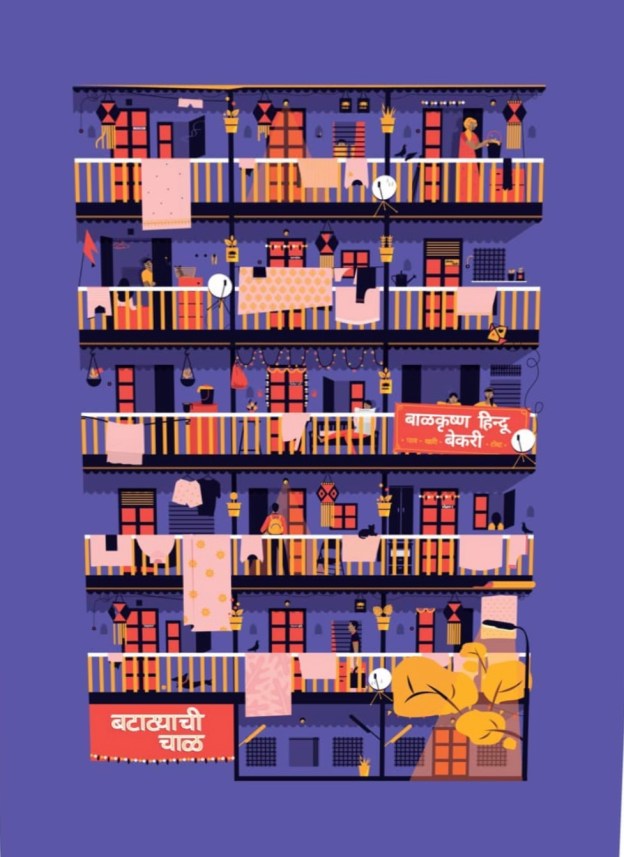
featured image: Batatyachi Chaal by Priyanka Karyekar (L) source; the culture gallery (R) source; Rastah/photographer, Rabia Ayub
Having no family in a 30-mile radius means creating and relying on an army of sitters.
One of my mandates for a sitter is no screen time for Shyla; I’m starting to appreciate the irony in this because outside of homework almost all my time spent with Mataji involved watching Hindi films. Yes Hindi not ‘Bollywood’ films as what they started to ubiquitously be termed in the 90’s. Not surprisingly coinciding with the economic liberalization of India whose goal was to attract more foreign investment. This intrusion of the west brought with it a standardization of beauty and a resurgence of a post-colonial hangover transforming once again India’s sense of ‘Self’.
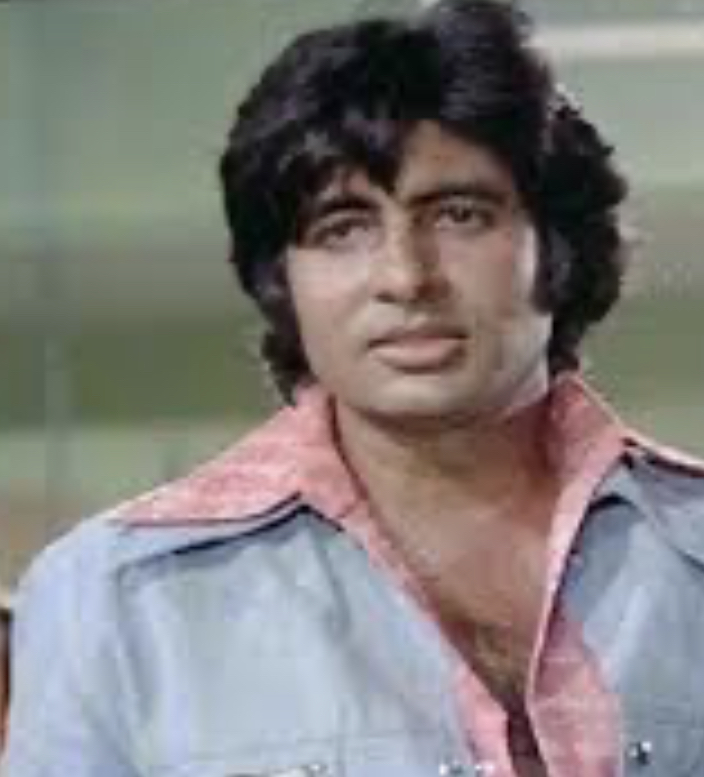
When I was young there was no need for the books I seek for my child; advocating emotional intelligence by illustrating that her heart can be pink with love, green with anger or yellow with courageousness. Instead I had Amitabh Bachchan. Undoubtedly one of the most influential actors in world cinema, and as child born in the 70’s I watched this star rise. He could be a romantic, an angry young man, a comedian and voice of reason. The Indian lens would deliberately loom over an actor’s face for an exaggerated response and contemplation in an eight year old. Not having the sophistication to gauge what was transpiring without fail l would incessantly ask Mataji as to what they were the thinking——and to this day it still surprises me that she responded every time. In the process I learned about human nature and cultural idioms.
I recognize the same curiosity in Shyla and now question whether I should incorporate Bollywood in her life as a means to introduce some form of culture and language in a world deficient of such.
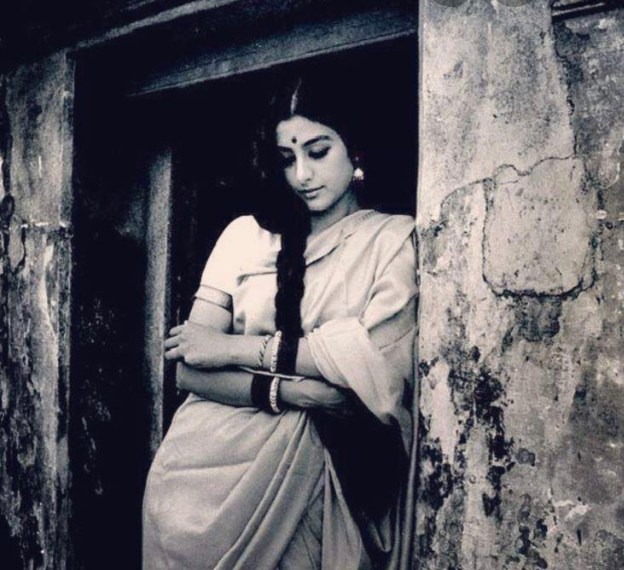
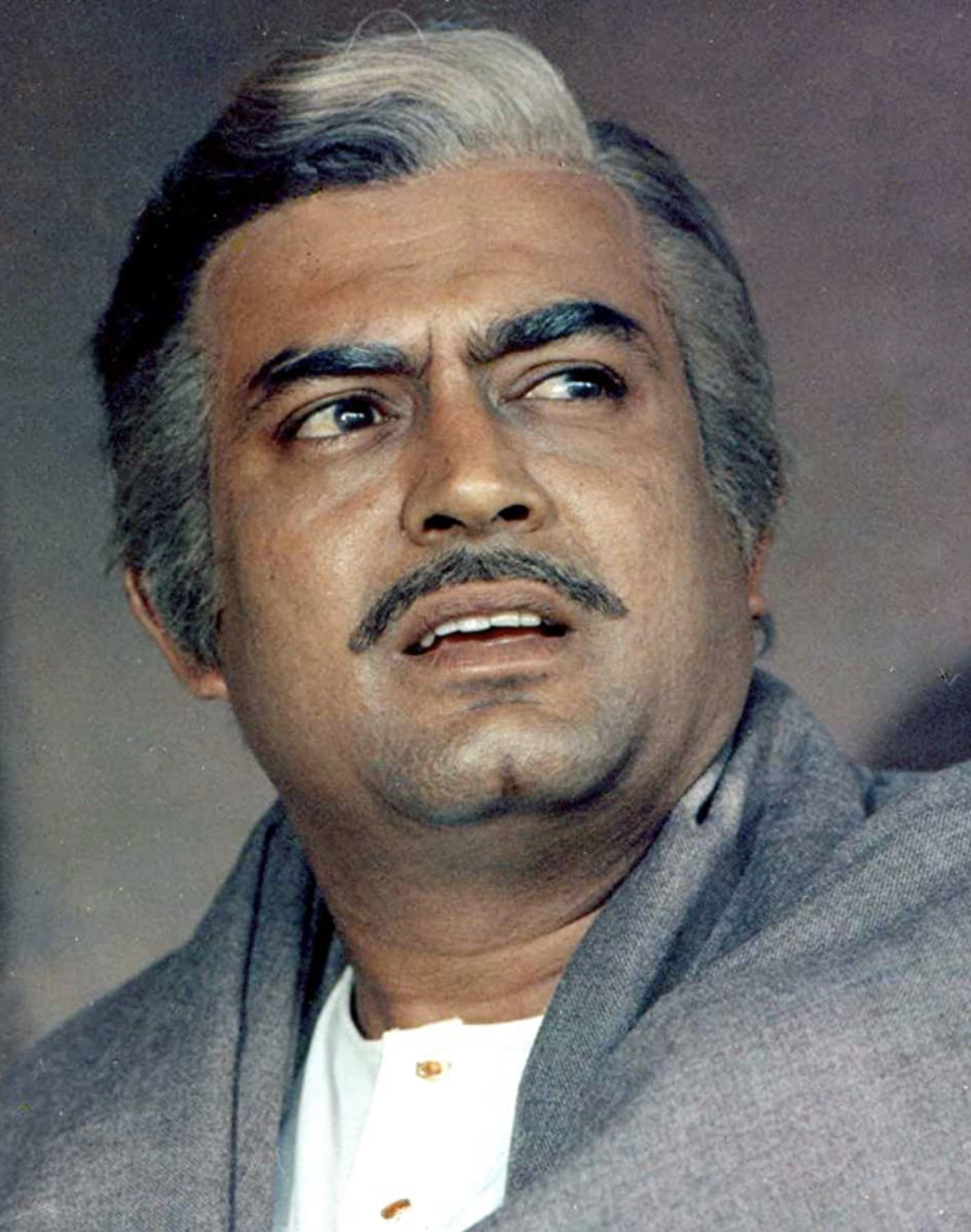
feature image: Tabu, a scene from Iruvar /new Indian express; images from top left: Sholay movie poster, amazon; Sanjeev Kumar imdb; Shashi Kapoor /the culture trip; Amitabh Bachchan/ India Today; Dharmendra-Sharmilla Tagore in scene from Anupama /dailyo
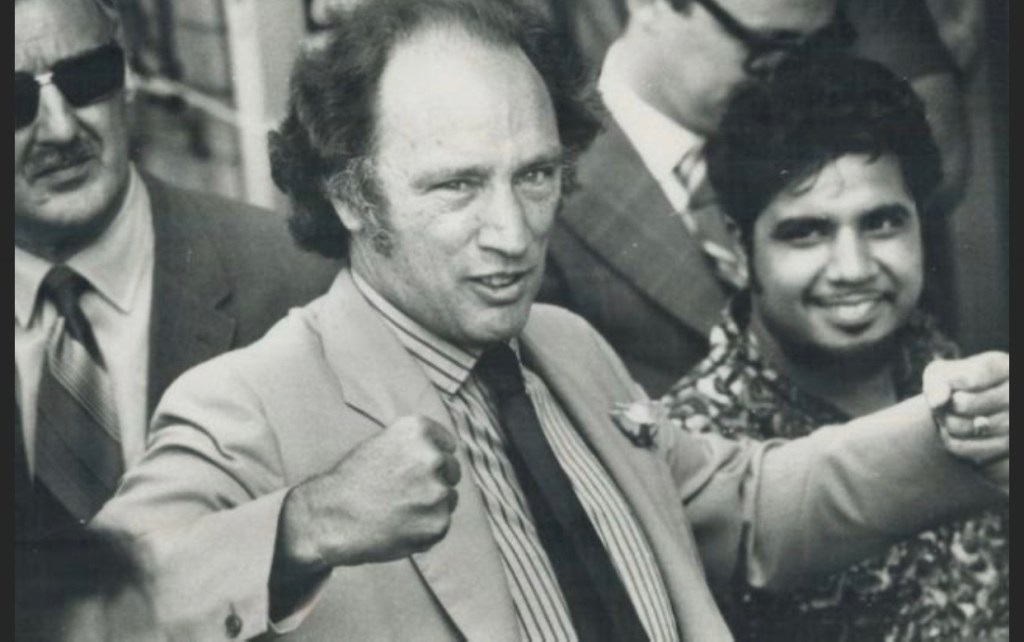
As special as Mataji is to me I am not oblivious to the fact that many children had households similar to ours as a result of Pierre Trudeau promoting multiculturalism in the 1970’s. Consequently, the portion of “family class” or sponsored relatives allowed into Canada expanded significantly; skewing the system towards large extended families. This explains how years ago in Winnipeg, a casual superfluous comment about our dear friend Garry’s grandmother, turned into an hour long reminiscence replete with mockery over these seemingly frail women who were the true dictators and puppet masters of our house holds. It’s remarkable that across this new nation of theirs these women operated in almost the exact way inevitably rendering respect and disdain; and yet somehow they transferred a sense of culture and family. This is what I grapple with now. How do I transmit this being away from all family in a city not nearly as ethnically diverse (as the one I grew up in), in a country increasingly becoming xenophobic, to daughters who are only half Indian?
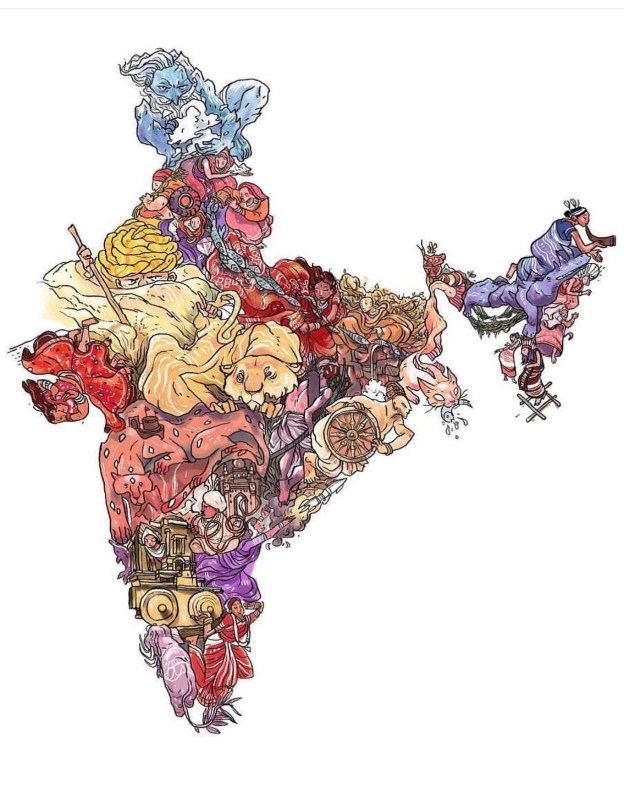
feature image: by Upamanyu Bhattacharyya; above image, Pierre Elliott Trudeau, seen here on June 23, 1971, pushed for a multicultural Canadian society later that year. Courtesy, Fred Ross/Toronto Star via Getty Images




















 Sepia-tinted Lens
You must be logged in to post a comment.